James Baird Weaver Quotes
The idea of giving to the homeless citizen a homestead is a humane one; but our public-land policy ought to be confined to that, and no one should be allowed to speculate in the common inheritance of all.
Weaver thought that the huge Federal land holdings should only be used to give land to homeless people. With land, they could build shelter, plant food, and raise cattle. In modern times it is much more difficult to help the homeless for few people could survive on a parcel of land even if given.
James Baird Weaver, 1833–1912, U. S. Congressman (Greenback Party, IA), Twice Presidential Candidate (Greenback Party and then The People’s Party (Populists), House Debate, 1883
Sourced by: Eigen's Political and Historical Quotations


Use included renting it. What he opposed was simply holding land when whites were driving Indians off their lands because all the unused land outside of the reservation was owned by someone and the asking price was very high. Ingersoll was considered to be the greatest orator and political thinker of his day, but his overt atheistic views curtailed his elected political career.

This was the basic document issued after the Russian Revolution establishing the basic legal and economic structure of the new Soviet State.


His bill introduced in the House of Representatives. It did not pass.


In every society where there had been past unjust ownership of land, all efforts of land reform were faced with the problem of having to dispossess the current “owners” who themselves had not been guilty of the crimes of their ancestors in unjustly obtaining the land originally. In America land reform was unworkable in most cases and the solution was usually a large monetary payment as compensation for the land.


Peter van der Kun. The Roman society had developed huge inequalities in the wealth of its citizens. Land was the measure of wealth as the value was produced by the farming of it. In an agrarian reform, the holdings of any one citizen was limited to 500 acres. In effect the Romans created a maximum of wealth. To the owners of the large tracts of land, this was a redistribution of wealth.


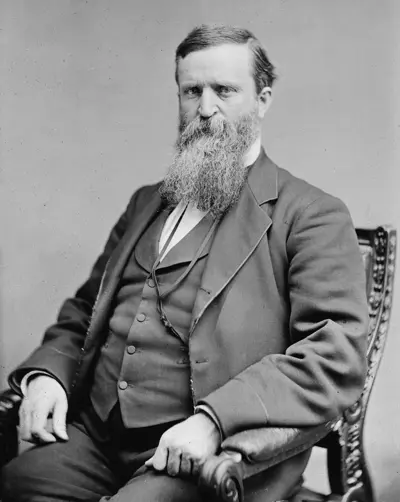
James Baird Weaver was a member of the United States House of Representatives and two-time candidate for President of the United States. Born in Ohio, he moved to Iowa as a boy when his family claimed a homestead on the frontier. He became politically active as a young man and was an advocate for farmers and laborers. He joined and quit several political parties in the furtherance of the progressive causes in which he believed. After serving in the Union Army in the American Civil War, Weaver returned to Iowa and worked for the election of Republican candidates. After several unsuccessful attempts at Republican nominations to various offices, and growing dissatisfied with the conservative wing of the party, in 1877 Weaver switched to the Greenback Party, which supported increasing the money supply and regulating big business. As a Greenbacker with Democratic support, Weaver won election to the House in 1878.
