Lyndon B. Johnson Quotes
The hungry world cannot be fed until and unless the growth of its resources and the growth of its population come into balance. Each man and woman-and each nation-must make decisions of conscience and policy in the face of this great problem.
Johnson, Lyndon B. "Annual Message to the Congress on the State of the Union." 10 Jan. 1967. Public Papers of the Presidents of the United States: Lyndon B. Johnson, 1967, Volume 1. Government Printing Office, 1968, p. 8.


Johnson insisted that he would not provide food to ease India’s famine until the nation adopted a family planning program including education about all methods of birth control and making available devices such as condoms to India’s poor


See {621143} for the situation even before the critical population is reached.


Often referred to as “Father of the Green Revolution” for his contributions to food growing throughout the world

The relationship of population increase economic growth is a critical one. If an underdeveloped country manages to have a 3% annual economic growth rate and also has a 3.2% population growth, at the end of the year, the average person is actually poorer than he was the previous year. South Korea, China, Thailand and India implemented successful population control and family planning programs before they were able to take advantage of economic development. To modernize, the country must be able to have a surplus of funds which can be invested in roads, schools, hospitals, and other facilities which can produce even more growth later. Too many new mouths to feed, clothe and care for can be a barrier to development even if the economy is reasonably good.

From a technical and production point of view, there is no practical limit to population size that is imposed by food production. We can produce sufficient food for the world even if population increases dramatically. None the less, even today we have some starvation and much malnutrition problems. These however are political, economic and tend to be distributional. We can produce the food. Morris does NOT advocate large population growth. Although food need not be a problem with an expanding population, job availability, medical care, energy, land, natural resources, ethnic hatred, migration, violence, and other problems are produced by population growth.
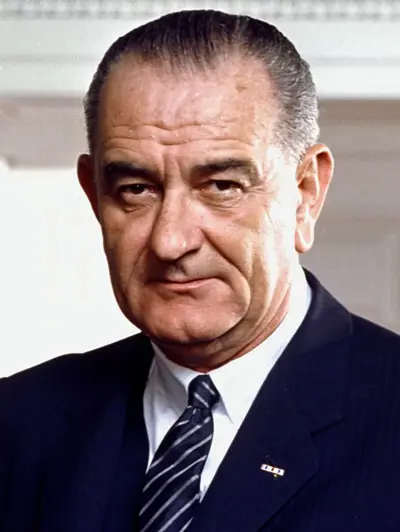
Lyndon Baines Johnson, often referred to by his initials LBJ, was the 36th president of the United States, in office from 1963 to 1969. He served as the 37th vice president from 1961 to 1963 and assumed the presidency following the assassination of President John F. Kennedy. A Democrat from Texas, Johnson was also a United States representative and later majority leader in the United States Senate. Johnson is one of only four people to have served, at various times, in all four federal elected positions.
