William Bradford Quotes
The houses standing close together, with the wind all was quickly on a flame, and thereby more were burnt to death than was otherwise slain. Some did escape the flames, but were slain with the sword, some hewed to pieces, others run through with their rapiers, so as they were quickly dispatched and very few escaped…. it was a fearful sight to see the Pequot thus frying in the fire and the streams of blood quenching the same, and horrible was the stink and scent thereof, but the victory seemed a sweet sacrifice, and they gave the praise thereof to God.
John Mason led a force of 90 Pilgrims and 70 Mohegan Allies quietly surrounded the Pequot village at Mystic. Then they fired their guns into the village and charged the Pequot houses, setting them on fire and killing all those who tried to escape. Over 400 Pequot were killed. The Mohegan allies were so shocked at the carnage that they shouted, “Stop! Stop! It is naught, it is naught, because it is too furious, and slays too many men.” Prior to the massacre of Mystic Village, there had been many battles and villages destroyed, but this marked the first time that entire populations of men, women and children were exterminated in the English Colonization. After Mystic village both whites and Indians participated in terrible massacres inflicted on each other. This was not the first massacre in America as the Spanish in the South and West commonly used the tactic.
William Bradford, 1590-1657, Pilgrim Father & Governor of Plymouth Colony, Description of the Extermination of the Pequots at Mystic Village, History of Plymouth Plantation
Sourced by: Eigen's Political and Historical Quotations

Prior to whites settling in America, various Indian tribes had a long history of fierce fighting for control of Kentucky. The Transylvania Land company negotiated for the “rights” to Kentucky. Dragging Canoe, who opposed the treaty, argued that the land had a bad history and would be very difficult to settle. Poet Theodore O’Hara described Kentuckians as “Sons of the Dark and Bloody Ground” in his poem, The Bivouac of the Dead.


14 Arab Armies in a coordinated attack on the 1 day old Israeli state, intended to massacre all the Israelis as demonstrated by this quote. Note that this kind of extermnination intent was advertised with pride. To everyone's surprised, the Jewish defenders not only beat back the viscious attacks but enlssarged their terroitory by capturing strategic sites from which the attacks had been launched. Many people credit to the Israely victory to the fact that they were litterally fighting for their lives. Defeat would have meant death for them and their families. The Arab armies, in contrast, were fighting for land that other Arabs claimed that should have been theirs. The willingness to stand and fight for this goal did not match the self preservation that motivated the Israelis--especially in the aftermath of the Holocaust killing 6 million Jews in WWII.
There are some who argue that the quotation was made earlier and was not meant as an incendary call for massacre of Israelis. It well may be that in his original thinking, he was predicting what would happen if the State of Israel was created, basing his thoughts on historical artrocieties of the past. And many think he was concerned about that possible outcome and was trying to avoid it. The import of the quotation was not necessaruly to hisltorically blame Assam for the point of view but to simply establish that there were many Arab voices calling for victories of history where there were massacres in the Middle East. And there were those who took Azzam's quotation and broadcasted it on Arab radio, calling for the very massacre that Assam may have been warning about. Note that this notion of Jewish massacre and extermination was also picked up 60 years later and called for by the President of Iran.

He was then a young Lieutenant.


A part of this quotation is very often taken out of context by just quoting the phrase “prosecution of an exterminating war” implying that Lamar was urging genocide. However, the war was urged only if the Indians did not cease their raids and massacres. Further, he specifically excludes women and children from the “extinction”. In addition he holds out the option of forced “total expulsion” if the raids continue. Brutal his threats were. And given that the whites were taking the Indians traditional lands it is easy to see where there were reasons for Indian resistance to white expansion. However, there was another reason that Lamar and most of the white settlers wanted the Indians expelled: They wanted the land.
The Philippine-American War was terribly brutal. In response to insurgent atrocities against American soldiers, some of the Americans also adopted brutal tactics including torture and mutilation. Washington had heard stories of this improper behavior in the part of some American troops and instructed the senior officers to investigate and discipline the men if the reports were true. Unfortunately some of the senior officers covered up the illegal and criminal behavior of some Americans. This quotation was taken from a New York Times report on a representative of the Red Cross who went to the Philippines at the invitation of the insurgents. He generally found serious atrocities by some of the soldiers on both sides but by no means all of the combatants. General Otis, the U. S. Commander tried to keep Blake out, and had him detained away from the battle areas for some weeks where he was “educated” about the enemy atrocities. Finally Blake got to the field and reached the insurgent commander who had invited him. His report generally praised the American troops, but spared no details when there were guilty of atrocities.


The Sultan, led 17 different military expeditions to India to spread the Muslim faith He is one of the few major conquerors of the world who was never defeated in Battle. He conquered the Lahore area and others of India that became Muslim and eventually became Pakistan. He was the first Islamic leader to bear the Title of Sultan demonstrating the separation of the civil power from the Caliph.


The Christian Crusaders had captured Jerusalem and slaughtered the Muslim civilian inhabitants. In the 21st century, some Islamic terrorists justified the beheading of captured Christian prisoners as revenge for this massive Christian beheading of Muslims almost 1,000 years earlier.

Jinnah and other Muslim leaders had stirred up the Muslims to violence to put pressure on all the parties to accede to Jinnah's Muslim League's demand of an independent Muslim nation—Pakistan. Messervy was very sympathetic to the Muslim leadership as he had been feuding with and frustrated by the predominantly Hindu ruling Congress Party. After partition he accepted the mercenary position of Commander in Chief of the Pakistani Army. Then he was shocked and horrified at the slaughter of the terrorist attacks by the Muslims—about 4,000 Sikh men, women and children had been beaten and cut to death. The Sikhs had been targeted largely because Sikh leaders had recently announced that if there were a Partition, Sikhs would refuse to live in nation under Muslim control.


He stormed offstage leaving the other panelists shocked. This boorish behavior and other at a dignified world intellectual meeting shocked most participants, diplomats, and government officials who castigated Erdogan. However, he returned to large popular approving crowds of his religious Islamic base who thought his behavior heroic. One irony of the Arab-Israeli Conflict in the Middle East as that with 60 years of war, occupation and conflict, the winning and dominant Israelis have killed very few Arabs, especially when one compares the number with the Arabs who were killed by their coreligionists. The Jordanian Army killed 7000 Palestinians in a single week when the Palestinians tried to take over Jordan. The Syrians killed 20,000 and decades later killed over 100,000 of their own people in their internecine civil war. Sunnis have butchered Shiaas and vica versa for over 1000 years, and more Muslims have been the victims of Arab Terrorism than Jews. But in the killing of Arabs, the over 1000 years of Turkish Rule of the Middle East produced incredible butchery by the Turks, which even they exceeded in the Armenian Genocide of Christians in the early decades of the 20th century. The Turks however tend to deny these events were deliberate policy and action but claims the dead were collateral damage of legitimate war. But killers they were, and they currently have one of the best and strongest militaries of the world.

While he fairly described the Spanish intentions, the reality which was not known at the time, was that most of the deaths in South America were caused by disease brought by the Spanish for which Europeans had some immunities and the natives of the New Word, none.
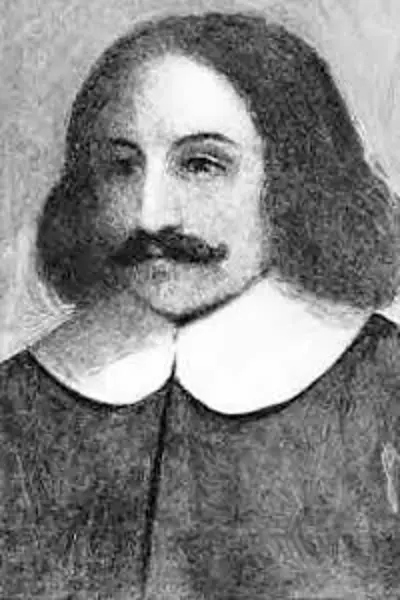
William Bradford was an English Puritan separatist originally from the West Riding of Yorkshire in Northern England. He moved to Leiden in Holland in order to escape persecution from King James I of England, and then emigrated to the Plymouth Colony on the Mayflower in 1620. He was a signatory to the Mayflower Compact and went on to serve as Governor of the Plymouth Colony intermittently for about 30 years between 1621 and 1657. His journal Of Plymouth Plantation covered the years from 1620 to 1646 in Plymouth.
