Aurangzeb Quotes
The houses of this country (Maharashtra) are exceedingly strong and built solely of stone and iron. The hatchet-men of the Govt. in the course of my marching do not get sufficient strength and power (i.e. time) TO DESTROY AND RAZE THE TEMPLES OF THE INFIDELS that meet the eye on the way. You should appoint an orthodox inspector (darogha) who may afterwards DESTROY THEM AT LEISURE AND DIG UP THEIR FOUNDATIONS
Sharma, Sri Ram. The Religious Policy of the Mughal Emperors. Oxford University Press, 1940, p. 138.


This is the “logic” by which Islamic terrorists have justified murder of civilians. Just as all Muslim men are fighters for Allah, all infidels are fighters against Allah and thus should die.

In the early stages of Islam, Muhammad had hoped to convert the Jews and others on the Arabian Peninsula. When they refused to be converted, he warred against them usually killing the men, and taking the women and children as slaves. The result was that non-believing tribes were “cleansed” from the Arabian Peninsula. The Muslims at the time preferred children as slaves. For then they could convert the children against their will. Adults in Islam must accept Islam in order to convert. Children are regarded as having no such maturity of decision making and therefore opposition to conversion may be ignored and they may be forced. Critics of Islam and those who argue that Islam is at odds with all other religions point to this quotation. They claim that it is the only religion whose founder and fundamental scriptures demand war against others for no other reason than that they believe in a different religion. The Catholic Church during the Crusades and the Inquisition had a similar philosophy as did Christian missionaries colonizing Africa later. One difference is that most Christians today repudiate the doctrine as against the true spirit and teachings of Christ and view it as historical error, while very few modern Muslims repudiate this quotation of the Prophet.
This quotation demonstrates that religious persecution of non Muslims was a duty, This has been a characteristic of all religious persecution regardless of religion. The quotation also shows that after 600 years, the original limited tolerance the Prophet had urged for People of the Book (Jews and Christians) was waning. Instead of non-believers being tolerated if they paid the special tax and were second class citizens, leaders were urged to convert or eliminate “infidels.”

Bashir advocates adapting Sharia—Islamic Law—for all people in Indonesia—regardless of their religion or their preference for separation of church and state. This is diametrically opposite to an Islamic Syrian poet of 1000 years ago—see {624477}. Many Muslims have become more intolerant than some of their earlier scholars. Bashir also differs from most Indonesian Muslims who have historically not shared his bigotry and intolerance.


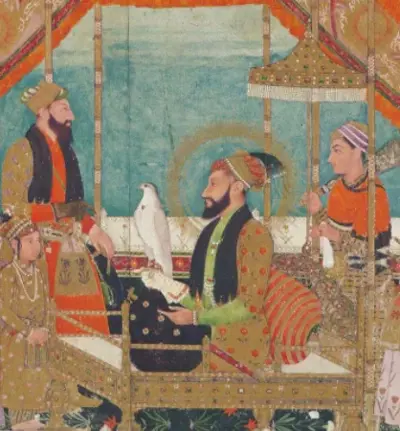
Muhi-ud-Din Muhammad, commonly known by the sobriquet Aurangzeb (Persian: "Ornament of the Throne") or by his regnal title Alamgir (Persian: "Conqueror of the World"), was the sixth Mughal emperor, who ruled over almost the entire Indian subcontinent for a period of 49 years. Widely considered to be the last effective ruler of the Mughal Empire, Aurangzeb compiled the Fatawa-e-Alamgiri, and was among the few monarchs to have fully established Sharia law and Islamic economics throughout the Indian subcontinent. He was an accomplished military leader whose rule has been the subject of praise, though he has also been described as the most controversial ruler in Indian history.
