Alfred Marshall Quotes
The hope that poverty and ignorance may gradually be extinguished, derives indeed much support from the steady progress of the working classes during the nineteenth century.
Marshall, Alfred. Principles of Economics. 8th ed., Macmillan and Co., 1920, p. 3.


The War on Poverty made substantial gains in reducing the percentage of poor people in America, but from 2000 till this statement in 2013, the economic policies and practices, together with the Great Recession, increased the assets of the richest Americans and also increased the percentage of poor Americans. See {634008}.

The "Great Depression" began the following year.


Many are surprised that the first Mexican revolutionary leaders were Catholic Priests, because the Catholic Church was always on the side of Spain and against Mexican revolutionary efforts. The church and the state were totally intertwined at the time, so the Church officials supported the government officials and vica verca. However, there were priests who saw the injustice and corruption of the colonial Spanish government, and not only sided with the revolutionists but became revolutionary leaders. These were opposed and usually excommunicated by the Church establishment authorities.
Origin of the phrase "the noble experiment" to describe Prohibition.

This appears to have been the earliest political use of the phrase, “Great Society.”


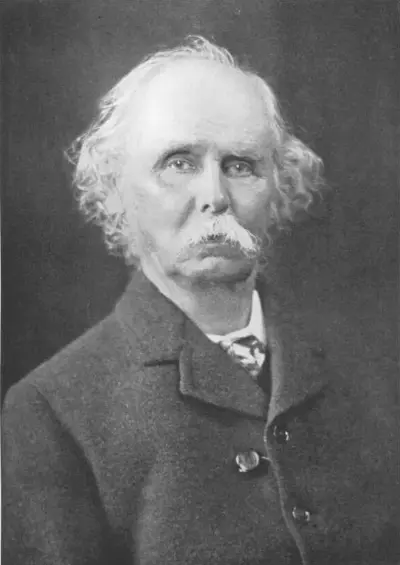
Alfred Marshall FBA was an English economist, who was one of the most influential economists of his time. His book, Principles of Economics (1890), was the dominant economic textbook in England for many years. It brings the ideas of supply and demand, marginal utility, and costs of production into a coherent whole. He is known as one of the founders of neoclassical economics.
