Nayef Al-Rodhan Quotes
The history of Israel-Palestine conflict cannot be understood without its underlying emotional meanders. The emotional frameworks of the loss of Palestine for the Arab-Islamic world touched deep scars that go back to the Crusades, symbolizing a proof of Arab-Islamic decay, political impotence, and perceived (British/French) betrayal and antagonism.
Al-Rodhan, Nayef R. F. A Neuro-Philosophy of Human Nature: Emotional Amoral Egoism. LIT Verlag, 2013.


Dayan was a strong advocate for co-existence with the Arabs and an understanding of their frustrations and disappointments without bowing to the extremists who wanted to destroy Israel.

For his seditious activities he was sentenced to penal servitude for life. He escaped and came to America where he entered politics


While the American Civil War was raging, Pinyin Hong Xiuquan started a quasi Christian religion (he claimed to be the brother of Jesus Christ) in China which initiated a war of extermination with the Manchus and other religions. More than 20 million Chinese were killed in a religious war that proportionately killed more Chinese than the Nazis killed in Europeans. Though hardly noticed in America and Europe, the religious war of extermination had been so traumatic that dissident religions are the most feared problem by Chinese modern leaders—more so than Capitalists, Taiwan or any of the modern ‘enemies’. It is the Falun Gong and the Tibetan Buddhists who the leadership fear might grow into another Yellow Turban movement—the worst Trauma of Chinese History—even worse than the Japanese WWII invasion. Hence the irrational view of the Chinese leadership towards religions they cannot control. See {612649} and {612649}. In Western terms as Wiesel put it, the Chinese leadership suppression of Tibet makes little or no sense, but current Chinese leadership is paranoid as a result of its history.


Things were not so different 80 years ago.

He was the scientist most responsible for the Pakistani nuclear bomb capability. However, he took his technological knowledge and without the knowledge of his government and contrary to their promises to the United States and other nations, accepted large secret payments to assist third world dictatorships to begin a nuclear weapons program. When he was caught, he was arrested but he is one of the very few world class scientists that Pakistan had ever had and was one of the most famous and popular Pakistani figures. The Pakistani Supreme court ruled that he was free to move about Pakistan but may not leave the country, and he is supposedly monitored to prevent his sharing nuclear secrets with terrorists and dictatorial states. In 2012 he formed his own political party.


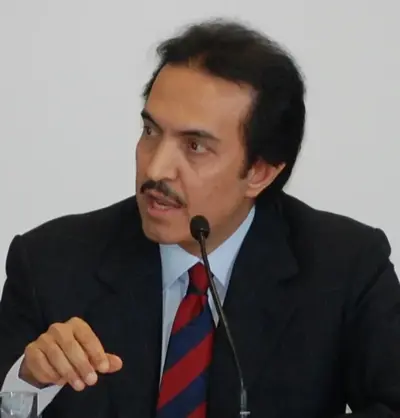
Nayef R. F. Al-Rodhan (Arabic: نايف الروضان; born 1959) is a Saudi philosopher, neuroscientist, geostrategist, and author. He is an honorary fellow of St. Antony’s College at Oxford University, Oxford, United Kingdom, and senior fellow and head of the Geneva Centre for Security Policy’s Geopolitics and Global Futures Programme, Switzerland, Senior Research Fellow, Institute of Philosophy, School of Advanced Study, University of London, United Kingdom, and Member of the Global Future Council on Frontier Risks at the World Economic Forum. His research focuses on the interplay between: Analytic Neurophilosophy, Geopolitics, Global Futures, Outer space security, Cultural discourse and synergies, Disruptive technologies, International Relations and Policy.
