Bernhard von Bulow Quotes
The history of England, who has always dealt most harshly with her vanquished foe in the few European wars in which she has taken part in modern times, gives us Germans an idea of the fate in store for us if defeated.
Bülow, Bernhard von. Imperial Germany. Translated by Marie A. Lewenz, Revised ed., Cassell and Company, 1916.


2nd Viscount Melbourne. This is a fascinating historical quotation for two reasons. First it shows the formality of address that is still used in England when communicating with the monarch. The queen would never be addressed by her name but by her title—“Your Majesty”. Rarely would the second person by used such s “you.” The Queen or King would also use the third person when referring t herself—“Her Majesty” Most fascinating is that the person writing to the monarch would also never use the first person—I. Nor would they use their family name like “William Lamb.” The correct form of address was to use their aristocratic title—“Lord Melbourne” or their Government title—“The Prime Minister. This quotation also reflects a very interesting thing about the Queen and her husband Prince Albert. They were both very young. At this time she was only 23. She was responsible for the largest empire in the world, yet had almost no experience and relatively little education in political and history. The Prince was better educated but came from Germany and did not know much of English history and politics. So they both devoted a part of each day to red together and learn. Victoria had asked Melbourne to recommend the books that he and the Prince would read. They took their responsibilities very seriously and unlike many rulers of heads f state, had no difficulty admitting their ignorance and worked hard to overcome them.

The Germans had invaded Russia. Most of the world thought the German Army was invincible. Stalin however, was historically right, and with U. S. material and weapons help, the Russians bore the brunt of Allied casualties, but also inflicted more casualties on the Nazi’s and were instrumental in their defeat.

The U. S. was evacuating all its forces and agents as the Viet Cong overran Saigon. This ended the Vietnam War. The CIA, had been telling the President and the National Security Staff that the Army reports were exaggerated and we were not faring well in the Vietnam War. Events proved them right. Their earlier track record, especially with President Nixon was very poor in intelligence analysis and prediction. See {634511}, {634509}, and {634503} for Nixon’s view of the CIA.

Genocide generally means the intentional destruction and elimination of a people. In the case of Columbus and the Spanish Conquistadors, they thought little of the lives of the indigenous people of the New World, but they wanted them for slaves to extract the gold and silver. They wiped out several peoples, mostly as a result of the communicable diseases (mainly smallpox) they brought from Europe for which the South Americans had little or no immunity. Also the size of the invasion forces (the Spanish) was relatively small. The size in land and number of people who they invaded was huge. The Spanish were the worst of the European empires from the point of view of the native colonized people. And Columbus was the trigger. So Chavez has a point in castigating Columbus and the Spanish but, typically, and like many politicians, his oratory lacked the precision of total accuracy.


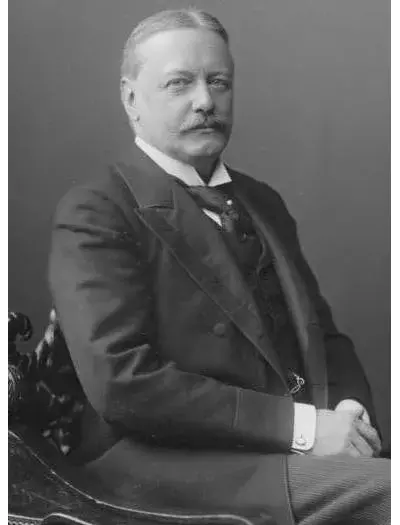
Bernhard Heinrich Karl Martin von Bülow, created Fürst von Bülow in 1905, was a German statesman who served as Foreign Minister for three years and then as Chancellor of the German Empire from 1900 to 1909. A fervent supporter of Weltpolitik, Bülow single-mindedly devoted his chancellorship to making Germany a leading power on the world stage. Despite presiding over sustained economic growth and technological advancement within his country, his government's foreign policy did much to antagonize the international community and significantly contributed to the outbreak of the First World War.
