Thomas Merton Quotes
The Hindus are not looking for us to send them men who will build schools and hospitals, although those things are good and useful in themselves--and perhaps very badly needed in India: they want to know if we have any saints to send them.
Merton, Thomas. The Asian Journal of Thomas Merton. New Directions, 1973.


At that time, and in much of the world today, religious preaching and those who do it are licensed by the state. Lucian’s response was one of the first statements that governments and temporal powers endorsement was not required, nor was any formal ordination or grant of authority from a formal church as existed among the pagans of the time where the religion was seen as another extension of the state. Even in America there is some ambivalence on this point. Many religions require not only training but a grant of authority from the religious hierarchy. Others such as some Baptists and many Protestant Fundamentalist groups believe that no specific authority is needed other than the “calling of god.” Lucian was apparently the first person to claim the authority as an individual. He was burnt alive for his position. There is a second Saint Lucian. To distinguish the latter is often referred to as Saint Lucian the Syrian.

Head of the Sikh Religion. He was the first Sikh Guru to utilize weapons,


He saw the different religions’ “messengers of God” such as the Jewish prophets, Jesus, and prophets of other religions as all part of God’s inspiration of man. His writings were influential on several religions. For example, Saint Thomas Aquinas quotes Mani on several occasions.
This quotation is one of the great religious ecumenical statements of history. Mani’s religion became extinct. Zoroaster was the prophet who founded the religion of Persia that preceded Islam and still has some followers. Like Judaism and Christianity, it is allowed under Islam as Mohammad had a large part of the Middle East who followed that religion.


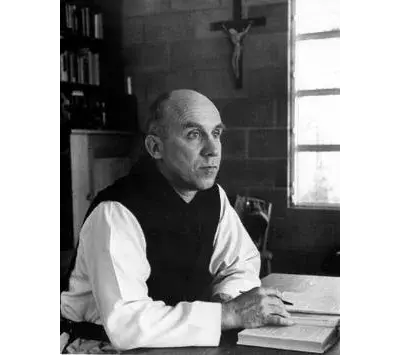
Thomas Merton OCSO was an American Trappist monk, writer, theologian, mystic, poet, social activist, and scholar of comparative religion. On May 26, 1949, he was ordained to the priesthood and given the name "Father Louis". He was a member of the Abbey of Our Lady of Gethsemani, near Bardstown, Kentucky, living there from 1941 to his death.
