John C. Calhoun Quotes
The highest wisdom of a State is a wise and masterly inactivity …
The ‘wise and masterly inactivity’ phrase was first used by James Mackintosh.
John C. Calhoun, 1782-1850, Vice President of the United States (Democrat, SC) Speech, South Carolina Legislature, 1831
Sourced by: Eigen's Political and Historical Quotations


This was a written form of Constitution of the first democracy of the New World. It was written before the whites came to the land that would become the United States.


Lovegrove was the Permanent Secretary of the British Ministry of Defence. The Permenant Secrataries to British Cabinet Level ministries have no parallel in the American system. As a practical matter they are the Number 2 authority in each ministry and are not appointed by the Prime Minister or the Cabinet Minister. They are the most senior civil servants in the nation and have enormous power but are not political and cannot be appointed or removed fro political reasons. Cabinet Ministers come and go but Permanent Secretaries are just that--as Permanent as anything gets to be in government.


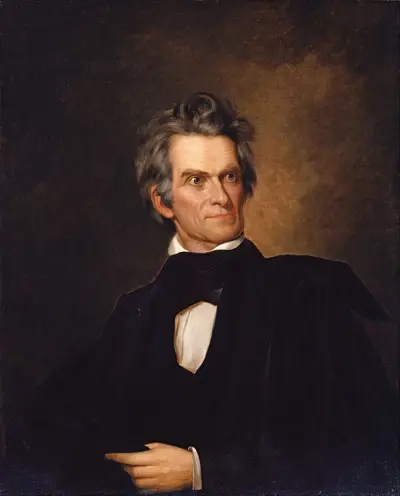
John Caldwell Calhoun was an American politician and political theorist from South Carolina who held many important positions including being the seventh vice president of the United States from 1825 to 1832, while adamantly defending slavery and protecting the interests of the white South when its residents were outnumbered by Northerners. He began his political career as a nationalist, modernizer, and proponent of a strong national government and protective tariffs. In the late 1820s, his views changed radically, and he became a leading proponent of states' rights, limited government, nullification, and opposition to high tariffs. He saw Northern acceptance of those policies as a condition of the South remaining in the Union. His beliefs and warnings heavily influenced the South's secession from the Union in 1860–1861.
