F. W. de Klerk Quotes
The government that came into power after the April 1994 elections was going to need a budget. It was drafted by our finance minister, Derek Keys, and he convinced them of the necessity to stay within the free-market principles that had been in force in South Africa for decades.
De Klerk, F. W. The Last Trek: A New Beginning. Macmillan, 1998, p. 345.


An unusual feature of the American governmental budgeting process is that Congress has passed a law limiting the amount of debt that the United States can maintain. When there is deficit financing, the law limiting the debt has to be changed periodically as the nation approaches the debt limit. Partisan politicians often take advantage of the fact that the debt limit must be passed and hold the passage hostage to obtaining something they want. The reality is that when Congress passed the previous budgets, they determined what the debt would have to be later. So they have already voted to exceed the budget ceiling. But the requirement of doing it in a second forum allows more pressure to be placed on the administration and the other party’s Congress members. While this process is ongoing, many people in the world are worried and often terrorized by the prospect of the debt ceiling not being passed, in which case the United States would have to default on its obligations—not pay interest, contractors, retirements, salaries, etc. Hence the admonition that the debt ceiling should never be a part of the budget negotiating process by most responsible statesmen and women. But the mist partisan of the politicians want to play politics with the debt ceiling precisely because the stakes are so high and they can get both headlines and leverage.


In 1992 Colorado passed a Taxpayer's Bill of Rights, known as TABOR that requires that spending increases get voter approval and the state refunds surpluses through a series of tax cuts. So the state ended up with the problem that Zelinski described.


1st Viscount Snowden

This quotation pithily summarizes a common problem in politics of describing budgets. In most years there has been a national inflation. If a new budget is, in actual dollars, the same as the previous years or a little more, but the increase is less than the inflation level, the agency will not be able to provide the same level of services as the previous year. Therefore services will be cut and those who are politically in favor of more money for the program legitimately describe this as a “budget cut”. Opponents of larger funding increases, also legitimately describe the funding as a “budget increase”. One side refers to what the money can buy and the other, to the absolute dollars spent. This is an example of the classical ambiguity of political oratory.


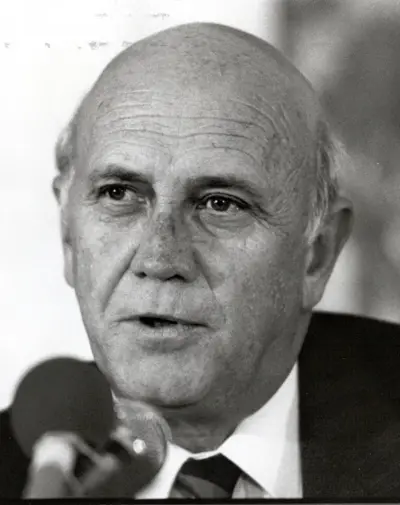
Frederik Willem de Klerk OMG DMS is a South African retired politician, who served as State President of South Africa from 1989 to 1994 and as Deputy President from 1994 to 1996. As South Africa's last head of state from the era of white-minority rule, he and his government were forced to dismantle the apartheid system and introduced universal suffrage. Ideologically a conservative and an economic liberal, he led the National Party from 1989 to 1997.
