Stanley Hauerwas Quotes
The god most Americans say they believe in is just not interesting enough to deny. Thus the only kind of atheism that counts in America is to call into question the proposition that everyone has a right to life, liberty and the pursuit of happiness.
Hauerwas, Stanley. Without Apology: Sermons for Christ's Church. Seabury Books, 2013, p. 18.


Jefferson had deliberately modified John Locke’s phrase “life, liberty and property.


The preamble to this declaration of womens’ rights cleverly beginy s with the words of the Declaration of Independence with the single change that “all men” is replaced with “all men and women.” The message was clear. If the founders had a moral right and duty to revolt for these objectives women would be justified and duty bound to make similar efforts. That message terrified many men of the era.

This was written and adopted by Vermont a decade before the United States Constitution the ideas for which were in existence in America before the Constitutional Convention in Philadelphia.


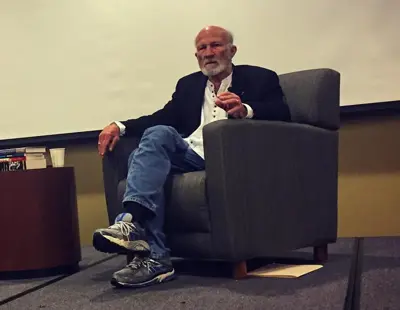
Stanley Martin Hauerwas (born 1940) is an American theologian, ethicist, and public intellectual. Hauerwas was a longtime professor at Duke University, serving as the Gilbert T. Rowe Professor of Theological Ethics at Duke Divinity School with a joint appointment at the Duke University School of Law. In the fall of 2014, he also assumed a chair in theological ethics at the University of Aberdeen. Before moving to Duke and the University of Aberdeen, Hauerwas taught at the University of Notre Dame. Hauerwas is considered by many to be one of the world's most influential living theologians and was named "America's Best Theologian" by Time magazine in 2001. He was also the first American theologian to deliver the prestigious Gifford Lectures at the University of St. Andrews in Scotland in over forty years. His work is frequently read and debated by scholars in fields outside of religion or ethics, such as political philosophy, sociology, history, and literary theory. Hauerwas has achieved notability outside of academia as a public intellectual, even appearing on The Oprah Winfrey Show.
