Kalle Lasn Quotes
The global economy is a doomsday machine that must be stopped and reprogrammed.
Lasn, Kalle. Culture Jam: The Uncooling of America. Eagle Brook, 1999.


Credit default swaps were in large part responsible for the melt down of the economy of 2008 and the Great Recession thereafter. A credit default swap was one of the favorite derivatives that became popular. Is an insurance policy that a company will pay off its bonds and not go bankrupt. It is a cross between an insurance mechanism and a stock exchange type security mechanism, and through heavy lobbying, escaped any kind of regulation. It cost a company no money to write a credit default swap, and they were paid to do so. As long as business and the economy was good, it was a terrific business but there was no way of ever knowing how much risk they were taking. So companies who wrote credit default swaps did not have to have the money to pay to back them up. When that happened in 2008, even the largest insurance company in the world collapsed because of the risk of having to pay the credit default swap and the U. S. Government had to take over the insurance company. In 2010, the Obama administration passed a financial reform bill that began to regulate credit default swaps. Buffet, the American who had made the most money in financial securities, realized the great danger not only to the company, but to the entire national economy. Most of the rest of the financial institutions, could make large amounts of money without have to have much capital as long as things went well. So credit default swaps began to exceed the other financial instruments in activity. Neither the Federal Reserve or the other government regulatory agencies chose to regulate these risky instruments nor even to require that they be publicly disclosed -- See {637987}, {637986} and {637992}.


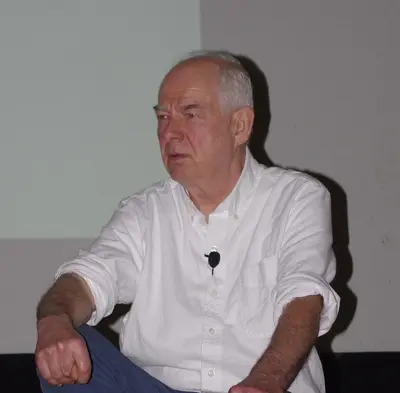
Kalle Lasn (Estonian pronunciation: [ˈkɑlˑɛ ˈlɑsn̥]) is an Estonian-Canadian film maker, author, magazine editor, and activist. Near the end of World War II, his family fled Estonia and Lasn spent some time in a German refugee camp. At age seven he was resettled in Australia with his family, where he grew up and remained until the late 1960s, attending school in Canberra. In the late 1960s, he founded a market research company in Tokyo, and in 1970, moved to Vancouver, British Columbia, Canada. Over the course of twenty years, he produced documentaries for PBS and Canada’s National Film Board. He currently resides in Vancouver, British Columbia.
