Theodore Roosevelt Quotes
The general tendency towards an eight-hour working day has undoubtedly been healthful, and it is wise for the State to set a good example as an employer of labor, both as to the number of hours of labor exacted and as to paying a just and reasonable wage.
Roosevelt, Theodore. "Sixth Annual Message." 3 Dec. 1906. A Compilation of the Messages and Papers of the Presidents, vol. 14, Bureau of National Literature, 1911, p. 7343.


This is one of the earliest calls for the 8 hour work day.


These were the same issues that were being fought over in every industrialized nation at the time.


The left has always been ambivalent about automation. Many object to it on the grounds that it puts men out of work. However, others such as Lafage, argued that automation was the only economic way to reform the working hours and conditions of labor. The problem at the time was that as long as labor was so cheap, there was no motivation for the manufacturer to invest in better machinery. He and many others argued that minimum wages and their increases increase productivity because it would force manufacturers to invest in more productive equipment to reduce their labor costs.
These work hours, 6 days a week were typical for Russian workers of the time. The Russian workers were ripe for any revolution or reform that promised a better life.
Labor reform was a burning issue in most of the industrialized countries of the world. The two areas that legislation was under consideration all over were working hours and child labor. There were no overtime provisions, employers were free to require workers to work 7 days for as many hours as they wanted. There were no limitations on the use of child labor. This is one of the classic conservative oppositions to these reforms. Ironically to us today, those against reform argued that it was disrespectful of the working man to take away his freedom to work whatever hours he so chose, and it was disrespectful of the workers role as a head of family to decide for him when and under what conditions his children could work. Germany at the time was a very dramatic example of the struggle as the Chancellor was opposed to all labor reform and Kaiser Wilhelm II felt that reforms were needed. The two most powerful Germans were split on this issue as were people in most countries.

In 1877 Wasburn was dropped from the List of Ministers by the Unitarian Church. He had become quite atheistic.
Ironically, this was the first “Union Label”. The union wages were being undercut by Chinese workers, but the union refused to allow non-whites into the Union. Had they organized the Chinese workers, history might have been very different. But racism was a destructive force then as it had been and would be later.

At the time, the mine owners and operators claimed that they had NO obligations to their workers—not even to ensure a safe mine. There was no OSHA and workers died and were maimed on the job much more frequently than they do today. Many mine owners now accept that they have obligations to the workers, and the rest are required to have responsible and safe working conditions by law and OSHA regulations.

At the time, 10 and 12 hour work days were common throughout the country and a movement had started to shorten the work day by legislation. Overtime payment over 8 hours was the eventual solution.


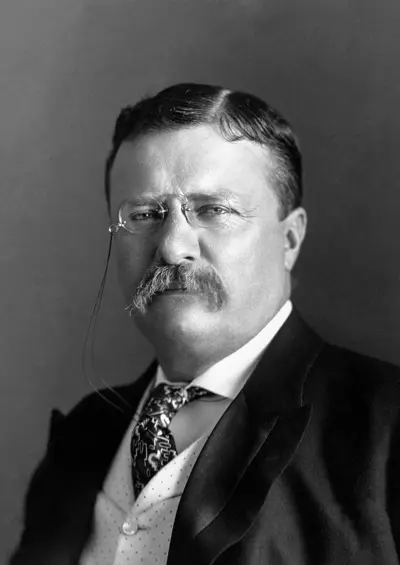
Theodore Roosevelt Jr., often referred to as Teddy or his initials T. R., was an American statesman, conservationist, naturalist, historian, and writer, who served as the 26th president of the United States from 1901 to 1909. He previously served as 33rd governor of New York from 1899 to 1900 and the 25th vice president of the United States from March to September 1901. Roosevelt emerged as a leader of the Republican Party and became a driving force for anti-trust and Progressive policies.
