Ernie Pyle Quotes
The front-line soldier wants it to be got over by the physical process of his destroying enough Germans to end it. He is truly at war. The rest of us, no matter how hard we work, are not.
Pyle, Ernie. Here Is Your War. Henry Holt and Company, 1943, p. 109.


He was the most decorated soldier in WWII with 21 medals.

His balanced judgment and concern for American Casualties changed during the Iraq War over a decade later where he insisted on taking steady American casualties even after Saddam had been deposed and American troops were in the middle of a sectarian civil war.


The General had differed with the George W. Bush Administration neoconservatives over the strategy regarding the invasion and war in Iraq. He was pushed out of office as a result. Later, it was clear that he was right originally, and the press, some members of Congress and others wanted him to comment. He refused.

“Tragedies” was used as a euphemism for incidents of “war crimes” or atrocities committed by individuals or small groups contrary to the official policy of the military or the country. McCain had personally been the victim of those committed by the Vietnamese in the Vietnam War. He was not surprised when some American and Canadian soldiers were guilty of some of these in the Afghanistan War.

There were other factors which Stalin did not mention. There was a major factor of revenge and retaliation. The Germans had killed 22 million Russians (many murdered deliberately), and forced millions of others into slave labor. They had looted everything of value, artistically or commercially from Russian, homes, churches and other buildings. Many of the Russian officers believed that treatment of the Germans was only just given the barbaric behavior of the Germans and applauded by most of the German population.

At the time she was herself in exile in Jordan where she worked with the over 1 million Arab refugees (from both Syria and Iraq) in Jordanian refugee camps. The contrast between the two groups of refugees she found dramatic.


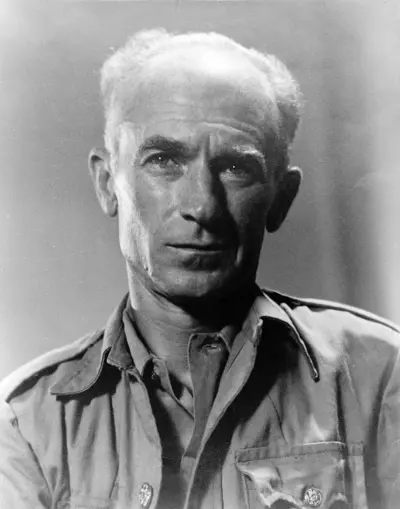
Ernest Taylor Pyle was a Pulitzer Prize—winning American journalist and war correspondent who is best known for his stories about ordinary American soldiers during World War II. Pyle is also notable for the columns he wrote as a roving human-interest reporter from 1935 through 1941 for the Scripps-Howard newspaper syndicate that earned him wide acclaim for his simple accounts of ordinary people across North America. When the United States entered World War II, he lent the same distinctive, folksy style of his human-interest stories to his wartime reports from the European theater (1942–44) and Pacific theater (1945). Pyle won the Pulitzer Prize in 1944 for his newspaper accounts of "dogface" infantry soldiers from a first-person perspective. He was killed by enemy fire on Iejima (then known as Ie Shima) during the Battle of Okinawa.
