Ernie Pyle Quotes
If I can just see the European war out I think I might feel justified in quitting the war.
Miller, Lee G. The Story of Ernie Pyle. Viking Press, 1950.


At the time although the United States was providing material assistance to England, there was still the naïve belief that America could avoid becoming involved in WWII.


The Shakers were an American religion and pacifists Lincoln learned. He was so impressed with their sincerity and way of life that he exempted Shaker men from the draft—the first conscientious objectors formally recognized in America. However, Lincoln made the statement to the Shakers which greatly impressed them and caused much reflection. Quakers had been pacifists also, but until the Civil War Draft there was no mechanism to test.

What is particularly interesting about this quotation is that it shows the role that vengeance played in the support of the war effort. Revenge is a “baser” motive than making the world safe for democracy or preserving freedom or stopping dictators. Yet the political and military leadership did not shy away from revenge as a war aim. Contrast this with later wars. Arguably the sneak attack on Pearl Harbor created a different dimension than existed in the Korean or Vietnam wars. Yet in the War on Terror, the attack of 9-11, created a situation like Pearl Harbor did. Yet President Bush and other political and military leaders had a definite policy of never acknowledging that revenge was a factor, despite the fact that many Americans openly saw this as a major war aim.

This quotation gives us a concept of the WWII home front effort where virtually everyone in American society was personally involved on a daily basis in the war. See also {637440}. This was so dramatically different from the home fronts for the wars in Afghanistan and Iraq where most of the American public had no direct contact with the war effort and was not called upon or even needed to do anything.


The phrase was picked up by the press, and then became the title to a patriotic song of World War II.

The American Army had just liberated Bellau Wood, but had lost almost 8,000 men.


Webb’s opponent had accused him of not being patriotic because he opposed many of President George W. Bush’s Iraq War policies. This technique of publicly intimating that an opponent was not patriotic because he opposed the hawkish proposals of the President, had worked very well for the Republicans before. Presidential Candidate John Kerry, a decorated war hero, was attacked and remarkably Senator Max Cleland who had lost three of his four limbs in battle was unseated by attacking his patriotism. When Senator George Allen, fighting for reelection, used the technique on Webb, Web responded much more aggressively than earlier Democrats had when faced with the accusation. Senator Allen, like most of the patriotism critics of heroic veterans, had never been in combat.


This statement is perhaps the greatest and most eloquent description of the United States exceptionalism and its behavior in WWII. Such a statement could only come from a non-American.
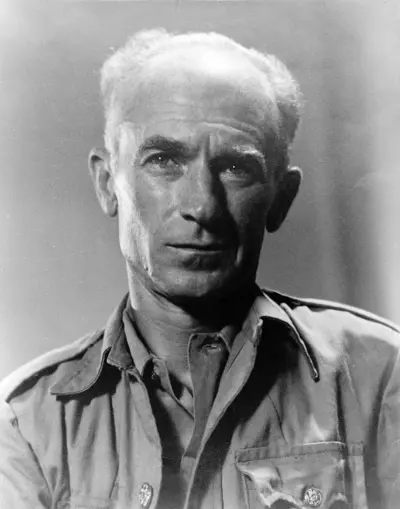
Ernest Taylor Pyle was a Pulitzer Prize—winning American journalist and war correspondent who is best known for his stories about ordinary American soldiers during World War II. Pyle is also notable for the columns he wrote as a roving human-interest reporter from 1935 through 1941 for the Scripps-Howard newspaper syndicate that earned him wide acclaim for his simple accounts of ordinary people across North America. When the United States entered World War II, he lent the same distinctive, folksy style of his human-interest stories to his wartime reports from the European theater (1942–44) and Pacific theater (1945). Pyle won the Pulitzer Prize in 1944 for his newspaper accounts of "dogface" infantry soldiers from a first-person perspective. He was killed by enemy fire on Iejima (then known as Ie Shima) during the Battle of Okinawa.
