Vladimir Lenin Quotes
The French monarchist and I shook hands, knowing that each of us would gladly have hung the other. But at the moment, our interests coincided.
Lenin described a 1917 negotiation with a French officer illustrating the necessity of pragmatism: Vladimir Lenin
Nikolai Lenin, 1870-1924, Russian Communist Premier, Works, Vol. XXVIII
Sourced by: Eigen's Political and Historical Quotations

Americans have always been ambivalent over negotiating with nations or regimes that are regarded as illegitimate and/or evil. If we do, we are implicitly recognizing them and if we don’t, there are few possibilities of reducing hostilities.


He was a realist who wanted to sue for peace before Germany was destroyed.


This quotation is noteworthy because it is typical with every politically extremist group. Negotiation and compromise are unacceptable and even dangerous to them. Almost a century after this quotation the Tea Party was making the same kind of statements.


South Africa’s transition from apartheid white minority rule to an interracial society with Black majority rule was one of the great political achievements in history. The Black leadership set a tone of reconciliation and inclusiveness that there was neither back retribution and vengeance, nor extensive white flight. Tutu and Nelson Mandella were two of those most resonsible for the leadership, but the good will and Christian charity of the South African blacks was the key to the success where all other white dominated African nations were NOT able to transition without extensive violence and/or flight.

The quotation was made in the context of the Arab Israeli conflict, but the principle is general.


Little Wolf led 300 Cheyenne off the Reservation. The soldiers followed but never could catch the Indians. Little Wolf made good the escape to Montana where he was allowed to stay. Later, he worked as a scout for the Army.


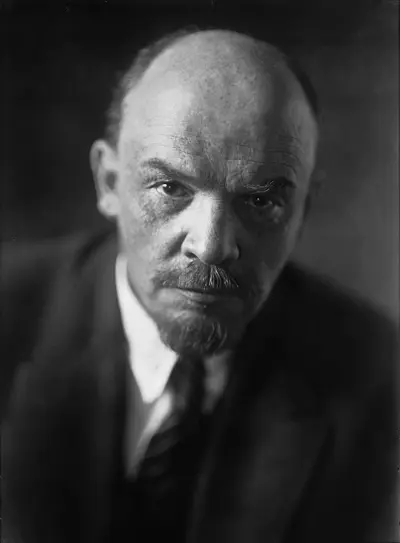
Vladimir Ilyich Ulyanov, better known by his alias Lenin, was a Russian revolutionary, politician, and political theorist. He served as the first and founding head of government of Soviet Russia from 1917 to 1924 and of the Soviet Union from 1922 to 1924. Under his administration, Russia, and later the Soviet Union, became a one-party socialist state governed by the Soviet Communist Party. A Marxist, he developed a variant of this communist ideology known as Leninism.
