John Dickinson Quotes
[The freeholders are] the best guardians of liberty, and the restrictions of the right [of suffrage] to them was a necessary defense against the dangerous influence of those multitudes without property and without principle with which our country, like all others, will in time abound.
John Dickinson, 1732-1808, Member of the Continental Congress, Delaware Delegate to the Constitutional Convention, Debate, Constitutional Convention, Philadelphia, 1787
Sourced by: Eigen's Political and Historical Quotations


Muir had spoken at the Convention of Scottish Friends of the People at Edinburgh in 1792. He had advocated election reform allowing all men to vote, not just property owners and was sentenced by Braxfield to the Australian penal colony at Botany Bay. Braxfield expressed the deep distrust the establishment felt even for merchants, traders and others with fungible assets.


A military junta had seized power because the electorate had elected a President not in military favor.


Originally it was published in Boston under the name “A Columbian Patriot.” She was worried about the jurisdiction of the Supreme Court extending throughout the country and yet the nation was very much smaller then than it is today. However, transport and communications have grown with the country.


To the pro-slavery politician, abolition was an abdication of government to fulfill it’s 3 major responsibilities. Slaves were private property and government had to safeguard the owner’s right to own that property. Slave owners had always been free in America to hold slaves, and abolition impinged on that freedom. And the slavery advocates knew better than the abolitionists how cruelly the slaves had been treated. They reasoned—that if anyone had treated them that way, they would if they could take revenge and kill the slave owners. Therefore, abolition threatened the lives of Southern citizens. Of course, Brown and his fellow slave-owners did not consider the fact that they had interfered with the right of the slave to own property, they denied him freedom, and in many cases killed slaves as examples or out of neglect. Their “logic” was that slaves were not citizens and therefor were not entitled to these protection.


John Witherspoon, a Presbyterian minister with evangelical sympathies, was one of the signers of the Declaration of Independence.


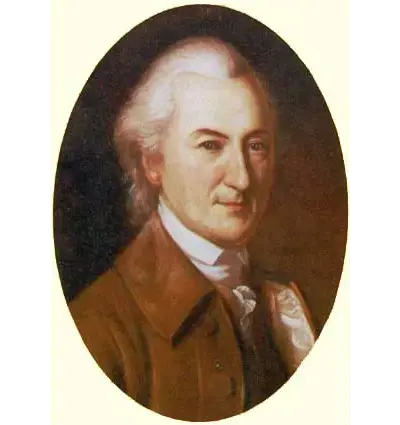
John Dickinson, a Founding Father of the United States, was a solicitor and politician from Philadelphia, Pennsylvania, and Wilmington, Delaware, known as the "Penman of the Revolution" for his twelve Letters from a Farmer in Pennsylvania, published individually in 1767 and 1768. As a member of the First Continental Congress, where he was a signee to the Continental Association, Dickinson drafted most of the 1774 Petition to the King, and then, as a member of the Second Continental Congress, wrote the 1775 Olive Branch Petition. When these two attempts to negotiate with King George III of Great Britain failed, Dickinson reworked Thomas Jefferson's language and wrote the final draft of the 1775 Declaration of the Causes and Necessity of Taking Up Arms. When Congress then decided to seek independence from Great Britain, Dickinson served on the committee that wrote the Model Treaty, and then wrote the first draft of the 1776–1777 Articles of Confederation and Perpetual Union.
