John the Apostle Quotes
The fourth angel poured his bowl on the sun, and it was allowed to scorch people with fire; they were scorched by the fierce heat, but they cursed the name of God, who had authority over these plagues, and they did not repent and give him glory.
"Revelation 16:8-9." The Holy Bible, New Revised Standard Version, National Council of the Churches of Christ, 1989.


During the American Revolution many patriot clerics argued against the monarchy by claiming that God has given Kings to the Ancient Jews—who had a type of Republic—as a punishment. Therefore monarchy is to be avoided.

This sura is interpreted by some Islamic fundamentalists as absolution for the killing of a non-Muslim by a Muslim. It was Allah who did it. In a greater sense, critics of Islam observe that many Muslims and Islamic nations have a double standard of responsibility for crimes. If the victims are Muslims, the normal standards of morality hold; but if a non-believer there can be no crime. Terrorism, torture, beheading, mass murder can all be done with a clean conscience if a Muslim takes this interpretation of this sura. Many Muslims however take an opposite point of view. These people do not have the concept of fatalism and lack of free will that others believe. There is a parallel to this problem in Judeo Christian countries although it is less common statistically. But the murder of physicians who perform abortions, and the Jewish radical fundamentalist who killed innocent Arabs at worship are examples of people who viewed themselves as instruments of God in their heinous activities.


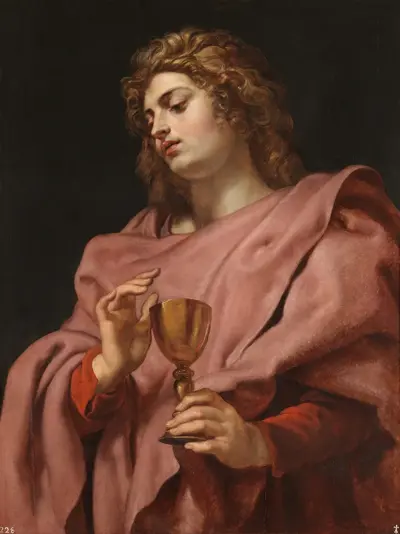
John the Apostle (Aramaic: ܝܘܚܢܢ ܫܠܝܚܐ, Yohanān Shliḥā; Hebrew: יוחנן בן זבדי, Yohanan ben Zavdi; Ancient Greek: Ἰωάννης; Coptic: ⲓⲱⲁⲛⲛⲏⲥ or ⲓⲱ̅ⲁ; Latin: Ioannes; c. 6 AD – c. 100 AD) was one of the Twelve Apostles of Jesus according to the New Testament. Generally listed as the youngest apostle, he was the son of Zebedee and Salome. His brother was James, who was another of the Twelve Apostles. The Church Fathers identify him as John the Evangelist, John of Patmos, John the Elder and the Beloved Disciple, and testify that he outlived the remaining apostles and that he was the only one to die of natural causes. The traditions of most Christian denominations have held that John the Apostle is the author of several books of the New Testament.
