Franz Kafka Quotes
The founder brought the laws from the lawgiver; the faithful are meant to announce the laws to the lawgiver.
Kafka, Franz. The Blue Octavo Notebooks. Edited by Max Brod, translated by Ernst Kaiser and Eithne Wilkins, Exact Change, 1991, p. 64.


In 1996 the Tennessee Senate passed a resolution to post the Ten Commandments in homes, schools and businesses. Cohen was then a Senator of the Tennessee State Legislature.


See Matthew Hale for a concurring view and Thomas Jefferson for a contrasting one.

The Judge, a fundamentalist Christian, unilaterally had a large granite monument of the Ten Commandments installed in the Rotunda of the Supreme Court Building. A Federal Judge in deciding a lawsuit ordered him to remove the monument which was held to have been placed there to symbolically uphold the supremacy of the Judeo-Christian tradition in our legal system. Judge Moore appealed to the U. S. Supreme Court which let the removal decision stand. However, the judge still resisted. The other 8 Alabama Supreme Court justices then removed the Chief Justice and ordered the monument removed. Moore who had been selected to office in a “Bible-Belt State,” still blocked the removal forcing a showdown with the Federal Courts and his colleagues in Alabama. Shortly thereafter, both the monument and Judge Moore were removed.

Watchtower Bible and Tract Society of New York

Hizb ut-Tahrir is a “worldwide Islamic political party.” It is banned as a terrorist, violence provoking institution in most of the Muslim countries and many nations in Europe.

Niemoller, a World War I U-boat commander and clergyman, was jailed for rejecting the National Socialist ideology and for appealing to German Christians not to embrace the new paganism of Nazism and Fascism.
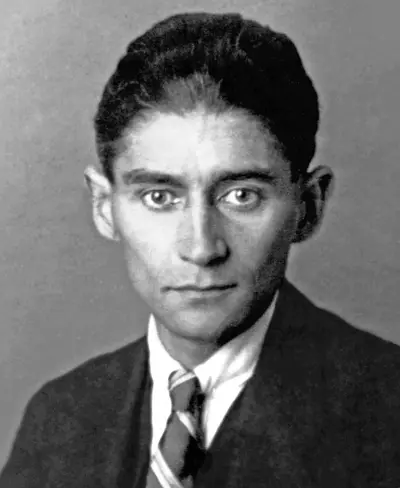
Franz Kafka was a German-speaking Bohemian novelist and short-story writer, widely regarded as one of the major figures of 20th-century literature. His work fuses elements of realism and the fantastic. It typically features isolated protagonists facing bizarre or surrealistic predicaments and incomprehensible socio-bureaucratic powers. It has been interpreted as exploring themes of alienation, existential anxiety, guilt, and absurdity. His best known works include "Die Verwandlung" ("The Metamorphosis"), Der Process (The Trial), and Das Schloss (The Castle). The term Kafkaesque has entered the English language to describe situations like those found in his writing.
