Benjamin Wittes Quotes
The foundations of modern civil-rights law are exceptionally secure. Conservative judges nibble around the edges sometimes, and people still debate the constitutionality of affirmative-action programs. But almost no one seriously argues about the basic meaning or legitimacy of core civil-rights protections.
Wittes, Benjamin. Confirmation Wars: Preserving Independent Courts in Angry Times. Rowman & Littlefield, 2006.


The case was Shelley v. Kraemer where the Supreme Court outlawed discriminatory restrictive covenants A restrictive covenant was a condition that was written into the deed on a piece of property. Even if the owner of the home did not want to discriminate, the previous owners who wrote the restrictive covenant into the deed (or his relatives and heirs) could sue and invalidate the sale. In many cases, insurance would not sell title insurance or banks would not give mortgages for a Black or a Jew where there was a covenant in the deed, even if the covenant was more than 100 years old. Homeowner associations would also enforce the covenants which were originally written into all the deeds of the development. Once the supreme court ruled that restrictive covenants were unconstitutional, no court would enforce any of these lawsuits. It was one of the fastest steps forward in the history of Civil Rights since the day after the court decision racists could no longer enforce the covenants that were in tens of millions of deeds in America.


Moynihan was actually not the political originator of the "benign neglect" phrase which became so controversial. It had been first used by The Earl of Durham in his 1839 Durham Report on the English policy towards Canada.

Blacks were fighting and dying in WWII. They were equal when they were under fire, but otherwise not. The war was against fascist protagonists whose creed was inequality while the allies were upholding freedom and equality. But making that aspiration a reality was difficult.


Quoted in the Court’s notes of the meeting


Smith, an extreme racist, was so rabid that MacGregor was supporting the Civil Rights Bill, he followed him off the House floor to make this statement. MacGregor jokingly told Smith that he was wrong. He had 17 Negroes in his District.


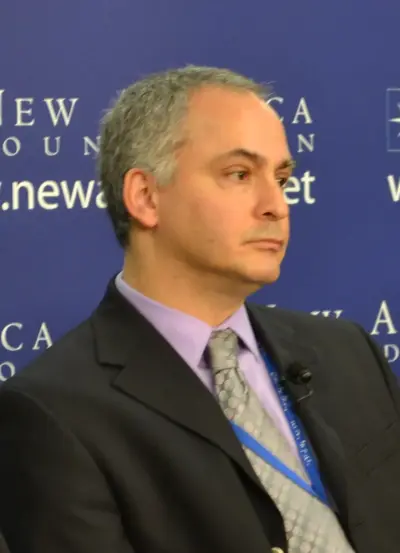
Benjamin Wittes is an American legal journalist and Senior Fellow in Governance Studies at the Brookings Institution, where he is the Research Director in Public Law, and Co-Director of the Harvard Law School–Brookings Project on Law and Security. He works principally on issues related to American law and national security. Along with Robert M. Chesney and Jack Goldsmith, Wittes cofounded the Lawfare Blog. Wittes is also a member of the Hoover Institution's Task Force on National Security and Law. Wittes is a frequent speaker on topics of detention, interrogation, and national security, before academic, government, policy, and military audiences. He also co-hosts the Rational Security podcast.
