Alexis de Tocqueville Quotes
The first who attracts the eye, the first in enlightenment, in power and in happiness, is the white man, the European, man par excellence; below him appear the Negro and the Indian. These two unfortunate races have neither birth, nor face, nor language, nor mores in common; only their misfortunes look alike. Both occupy an equally inferior position in the country that they inhabit; both experience the effects of tyranny; and if their miseries are different, they can accuse the same author for them.
Tocqueville, Alexis de. Democracy in America. Translated by Harvey C. Mansfield and Delba Winthrop, University of Chicago Press, 2000.


Charleston was in the Southern part of the state where most people supported slavery. Douglas made an unequivocal pitch for the racist vote {600060} and forced Lincoln to take a stand. Like many politicians today, Lincoln decided to give the audience what they wanted to hear. It is not clear whether or not he ever believed this statement or was just pandering in a political campaign. He had never said this in the Northern part of the state of before. Lincoln’s views on race changed and matured over the years, culminating in the Emancipation Proclamation. Lincoln lost the Senate seat to Douglas.


Supervisors of black soldiers reminded them that

It was not until this publication that people who suggested that discrimination and lack of education and opportunity might have something to do with the problem Blacks faced in society were regarded by many Americans as anything but left wing intellectuals.
It was indeed the first government that was ever founded on that fallacious principle. In retrospect, it was amazing that more Southerners did not question why no other government in the history of the world based a society on that principle. The Southern hubris was a great failing for them.

Grady, a Georgian, prompted himself as a spokesman for the “New South” and while he did no advocate slavery and the brutality that had been inflicted on Southern Negroes, he was a strong white supremacist as this quotation demonstrates. He was only “liberal” compared with the total revanchist racists. However, when in the North he spoke kindly about the Negro. See Quotation 643652.


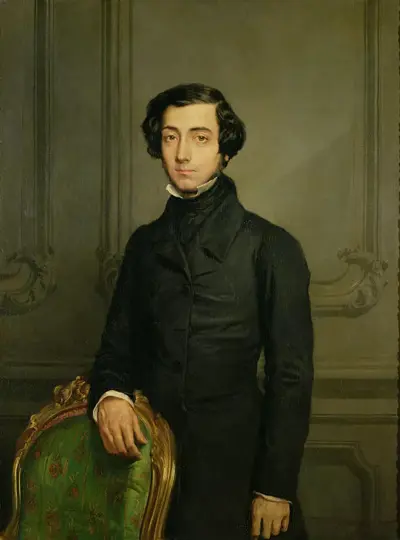
Alexis Charles Henri Clérel, comte de Tocqueville, colloquially known as Tocqueville (/ˈtɒkvɪl, ˈtoʊk-/), was a French aristocrat, diplomat, political scientist, political philosopher and historian. He is best known for his works Democracy in America (appearing in two volumes, 1835 and 1840) and The Old Regime and the Revolution (1856). In both, he analysed the improved living standards and social conditions of individuals as well as their relationship to the market and state in Western societies. Democracy in America was published after Tocqueville's travels in the United States and is today considered an early work of sociology and political science.
