Tom Clancy Quotes
The first rumors about Zenith came from the Czechoslovakians.


Responding to suggestions that with the demise of the Berlin Wall the spying business will come to a halt: John Moore Cornwell


The “gentleman” was a member of Congress. This is an issue between the Congress and the Executive Branch which has existed as long as our Republic: Whether all members of Congress should have access to all classified secret information of the Government. Mrs. Roosevelt who was usually an advocate of transparency, on this issue tended to side with the argument of the executive branch. Note that the arguments made in 1939 are still fought over today.

North Korean male officials are not the only pornography lovers. American agents did the same as long ago as with King Farouk of Egypt and Sukarno of Indonesia along with many others.


This fact was one of the reasons that McCarthyism and HUAC were able to get traction. The Red Scare paranoids found something to really worry about. They overreacted, sensing the problem not as one of a large number of misguided and naïve people trying to help America do better, but as active spies controlled by the Kremlin who wanted to destroy the American way of life. There were two basic reasons these naïve officials acted that way. Many of them had not forgotten the devastation of the American people in the Great Depression and believed that capitalism had almost failed completely and the rough edge had to be taken off American capitalism by injecting some socialist principles such as stronger labor unions, ending racial and religious discrimination, controlling monopolies, and regulating critical industries. They also were mindful of the fact that the Russians were bearing the brunt of the WWII casualties—military and civilian—while killing more of the Germans and capturing more German occupied territory than the other allies together, yet they were not receiving the same level of assistance—technical, intelligence, economic and political as the British. They saw helping the Russians as saving American lives on the battlefield by making them more effective and keeping German soldiers and weapons away from the Western front and Americans. They also remembered that many in Congress were opposed to our entering WWII in Europe until Germany declared war on America. They had in many cases been apologists for Fascism and passionate enemies of communism. Some American industrialists like Henry Ford were anti-Semitic and overt admirers of Hitler. {586985} So these officials tried to redress the imbalance that existed while at the same time little was really known about Soviet Russia and the Stalin excesses that were as bad as some of Hitler’s. {634969} The only information Americans had were the terrible casualties the Russians were taking and the in kind that they were dishing out to the Germans. The number of Soviet spies in America were few and commensurate with the number of agents we had in Russia. But few Americans realized the difficulty the U. S. and the rest of the democratic world would have with Russia after the war was won.


The U. S. Counterintelligence team identified several KGB agents who were stealing American technology in various forms. Gus W. Weiss of the National Security Staff devised a plan where instead of arresting the Russian agents, FBI agents posed as mid-level science and technology workers who could be bribed to turn over American technology. Then they provided technology that did not work which the Soviets then proceeded to engineer and fabricate the techniques which never worked correctly. By the time the Russians found out they had wasted much effort and money at spying and engineering.
The 1st the CIA ever had. Popov was, in the 1950s, considered the CIA’s most valuable agent. He was motivated by deeply felt anger at Soviet exploitation of Russian peasants, including his family. He was caught and executed by Russian authorities in 1960. The quotation illustrates just how simple was his initial communication for spying.
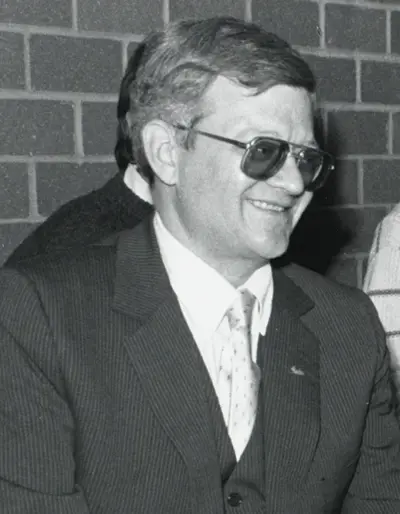
Thomas Leo Clancy Jr. was an insurance agent turned American novelist best known for his technically detailed espionage and military-science storylines set during and after the Cold War. Seventeen of his novels were bestsellers, and more than 100 million copies of his books were sold. His name was also used on movie scripts written by ghostwriters, nonfiction books on military subjects occasionally with co-authors, and video games. He was a part-owner of his hometown Major League Baseball team, the Baltimore Orioles of the American League and vice-chairman of their community activities and public affairs committees.
