John le Carre Quotes
I wrote 'The Spy Who Came in from the Cold' at the age of 30 under intense, unshared personal stress and in extreme privacy. As an intelligence officer in the guise of a junior diplomat at the British Embassy in Bonn, I was a secret to my colleagues, and much of the time to myself.
Le Carré, John. "John le Carré: The Spy Who Came in from the Cold Turns 50." The Guardian, Guardian News & Media, 12 Apr. 2013.


North Korean male officials are not the only pornography lovers. American agents did the same as long ago as with King Farouk of Egypt and Sukarno of Indonesia along with many others.


This is a major issue for the nation. How can the president be responsible if he is not informed? However, some argue that the President must have “plausibility deniability” so he can deceive foreign leaders without lying to them. The laws require that nothing may be withheld from the President but there are some in the agency including past directors who believe that they sometimes should lie to the President or withhold information when it is in the national interest—which of course only they judge without any checks and balances.


While it is true that almost all nations have intelligence agencies and collect intelligence about both friends and foes, our allies did not bug the personal phones of leaders of friendly countries and were very distressed when they discovered that the US NSA had access to the personal calls of world leaders including the leaders of Brazil, Germany and France. Rubio and others believed that they only reason our allies had not done so is that they did not have the technical capability to do so; otherwise they would have been bugging our Presidential and cabinet level phones. President Obama ordered the practice stopped with respect to our allies.


Kellis was the first of the Central Intelligence Agency whistle blowers. The President acted promptly on the letter and appointed General Jimmy Doolittle to conduct an investigation which confirmed the Kellis letter.
This fact was one of the reasons that McCarthyism and HUAC were able to get traction. The Red Scare paranoids found something to really worry about. They overreacted, sensing the problem not as one of a large number of misguided and naïve people trying to help America do better, but as active spies controlled by the Kremlin who wanted to destroy the American way of life. There were two basic reasons these naïve officials acted that way. Many of them had not forgotten the devastation of the American people in the Great Depression and believed that capitalism had almost failed completely and the rough edge had to be taken off American capitalism by injecting some socialist principles such as stronger labor unions, ending racial and religious discrimination, controlling monopolies, and regulating critical industries. They also were mindful of the fact that the Russians were bearing the brunt of the WWII casualties—military and civilian—while killing more of the Germans and capturing more German occupied territory than the other allies together, yet they were not receiving the same level of assistance—technical, intelligence, economic and political as the British. They saw helping the Russians as saving American lives on the battlefield by making them more effective and keeping German soldiers and weapons away from the Western front and Americans. They also remembered that many in Congress were opposed to our entering WWII in Europe until Germany declared war on America. They had in many cases been apologists for Fascism and passionate enemies of communism. Some American industrialists like Henry Ford were anti-Semitic and overt admirers of Hitler. {586985} So these officials tried to redress the imbalance that existed while at the same time little was really known about Soviet Russia and the Stalin excesses that were as bad as some of Hitler’s. {634969} The only information Americans had were the terrible casualties the Russians were taking and the in kind that they were dishing out to the Germans. The number of Soviet spies in America were few and commensurate with the number of agents we had in Russia. But few Americans realized the difficulty the U. S. and the rest of the democratic world would have with Russia after the war was won.

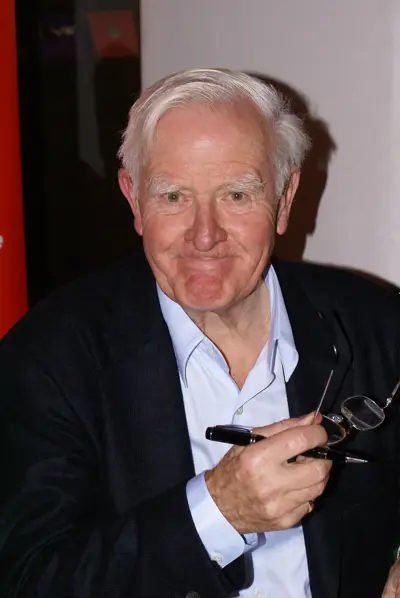
David John Moore Cornwell, better known by his pen name John le Carré (/ləˈkæreɪ/), was an English author with Irish citizenship, best known for his espionage novels. During the 1950s and 1960s, he worked for both the Security Service (MI5) and the Secret Intelligence Service (MI6). His third novel, The Spy Who Came In from the Cold (1963), became an international best-seller and remains one of his best-known works.
