Aldrich Ames Quotes
The FBI, to its credit in a self-serving sort of way, rejects the routine use of the polygraph on its own people.
Ames, Aldrich H. "The Polygraph in Espionage and Counterintelligence." Federation of American Scientists, 2000.


The FBI had obtained a court order requiring apple to write software that could hack into a person's iPhone. Apple, with most other hi-tech companies in support, filed a motion with the court opposing the order. The FBI shortly thereafter withdrew its request for the order saying that they had found other solutions, when they had originally told the court that there were no other solutions.

Gates believed that ideally the government would have the trust of the people to access critical data, but that at the moment there are many who do not trust the government. Unfortunately, the FBI on many occasions have themselves broken the law and targeted people who had political and social viewpoints of which the FBI leadership did not approve. The CIA has on many occasions violated the law and repeatedly lied to Congress and even Presidents. The National Security Agency has also, in its zeal to carry out its mission skirted the law and the Director of National Intelligence blatantly deceived Congress and was exposed by the Snowden releases. Gates was an optimist and thought that the government could regain the necessary trust to allow it to have access to virtually all data in order to best protect society from things like terrorism with biological weapons.

In the face of terror bombings, Britain passed some anti-terror laws which also somewhat infringed on civil rights, liberty and privacy.

The agent, at J. Edgar Hoover’s instruction had approached the editor of Martin Luther King Jr.’s hometown newspaper and offered Patterson a photograph of King and a white woman in front of a motel with the “information” that King was having an affair with the woman. The agent suggested that the story was that the minster while pretending to respect Christian morality in his public persona was actually violating basic moral standards. Patterson, like any qualified editor would realize that the photograph proved nothing about an affair. There might have been other staff nearby who were not framed in the picture that the FBI agents had taken. There might have been a meeting to discuss civil rights strategy or something else. To Patterson it was unheard of that a Federal Official should try encourage a newspaper to slander an American citizen. Even if true, the Federal Role was astounding. Actually, this was a very common tactic of J. Edgar Hoover and not at all unusual. Also, although it is not known whether King was having any kind of affair with the woman in the picture, King was not a faithful husband from a sexual point of view. At the time, facts about extramarital sex were not printed about politicians and other political figures even if the journalists knew of them (as with John F. Kennedy’s many liaisons) unless they affected the person’s job or made them less effective. It is not known whether Patterson knew anything of King’s peccadillos but that kind of keyhole journalism was not practiced by serious newspapers at the time even if the pictures could be confirmed. That would be “keyhole journalism”—peeping through keyhole to invade the personal privacy of people.

Jones constantly told King and other associates that the FBI was tapping their telephone conversations. Senator Joseph McCarthy was a right wing paranoid who imagined communists throughout the government. Jones turned out to be right. During that period, the height of the Civil Rights Movement, the FBI was listening, recording, and transcribing, every single phone call to or from King including the conference calls and calls with his attorney. FBI Director received frequent briefings on what King and his associates were doing. Although he ordered the wiretaps, it was Robert F. Kennedy, then the Attorney General, who had to approve them.

She was commenting on the incident when in 2013, Congress awarded its highest honor to the 4 young Black girls who were murdered in Birmingham, Alabama at the height of the Civil Rights Movement by the KKK who set off a bomb in the 16th Street Baptist Church. The sister of Addie Mae Collins, one of the murdered girls, who herself was wounded in the bombing, refused the medal on behalf of her dead sister. She resented the fact that it had taken all these years for Congress to make this gesture and then would not do anything that might cost money such as monetary restitution. When the Muslim terrorists murdered people in the 9-11 World Trade Center attacks, Congress swiftly arranged for restitution payments to go to the relatives of the murdered victims and to those wounded. However to many people, when white terrorists murder black victims no restitution many comes forth—only a medal. See {634035} for the sister’s statement.

He was the Chairman of the Senate Judiciary Committee.


Kennedy was not being literal, but was sarcastically joking about the overemphasis that J. Edgar Hoover and the FBI leadership was placing on investigating civil rights leaders and communists instead of investigating the hundreds of Southern murders and assaults on civil rights workers and organized crime. The FBI leadership was itself quite racist at the time, and Hoover never wanted to take on organized crime. He did not regard organized crime as an existential threat to the United States (the way he did about civil rights demonstrations) and he feared that with the big money available to organized crime, many of his agents would be corrupted.

When he became a candidate, he modified this position and stated that he would abolish both agencies spying on Americans activities but not necessarily abolish all the functions of the agency.
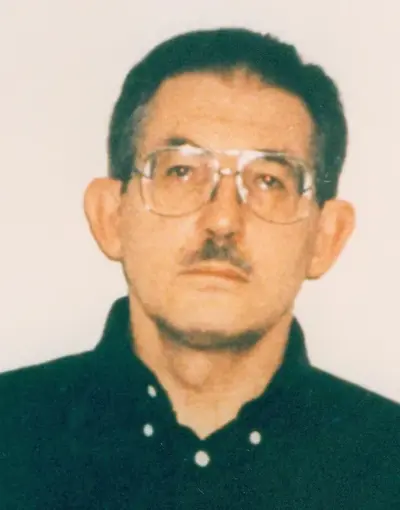
Aldrich Hazen "Rick" Ames is a former Central Intelligence Agency (CIA) officer turned KGB double agent, who was convicted of espionage in 1994. He is serving a life sentence, without the possibility of parole, in the Federal Correctional Institution in Terre Haute, Indiana, United States. Ames was formerly a 31-year CIA counterintelligence officer who committed espionage against the U.S. by spying for the Soviet Union and Russia. At the time of his arrest, Ames had compromised more highly classified CIA assets than any other officer in history until Robert Hanssen's arrest seven years later in 2001.
