Galeazzo Ciano Quotes
The farewell between Hitler and Mussolini at the station was very affectionate. Both men were moved.
Ciano, Galeazzo. Ciano's Hidden Diary, 1937-1938. Translated by Andreas Mayor, E. P. Dutton & Co., 1953, p. 113.


Donovan had been criticized for utilizing "leftists" for intelligence activities. Precursor to CIA. Donavan was a prominant attorney, banker and financier as well as a Medal of Honor Winner when he was asked to organzie the OSS. America was far behind the axis and even our allies in spy craft. J Edgar Hoover focused the FBI on leftists and had veritually no capability for spying in Western Europe and Asia. Donavan's OSS produced almost all of the actionable intelligence and did a wonderful job in organziaing covert operations. He used people who would normally never be considered by an espionage agency including many scholars, intellectuals, scientists, and entertainers. His agents ranged from Julia Child, the gourmet chef. to Moe Berg, a New York Yankee Baseball Player who spoke many languages. Hoover and some if the military intelligence agencies were jealous of his success and his access to President Roosevelt, and complained about anything they could find and hisi agents were an easy target for their wealth, societal connections, sexual indescretions, liberal politics, Bohemians, upper class right wing politics and culture. None of thus phased Donavan. After the war and FDR's death, Donavan's enemies got the OSS disbanded. Soon, something was needed, and the CIA was organized along the lines of Donavan's recommendations.

Coughlin was a great admirer of Adolf Hitler and Benito Mussolini and the Fascists. He was one of the American “heroes” in Nazi Germany, receiving assistance from the Nazi government. Between his anti-Semitism and support for Hitler, Fascism and radical socialism, the Vatican ordered him off the air and shut down his political demagoguery.

This quotation is important because there are some who believed that the professional German Soldiers did not respect Hitler and his murderous policies. This quotation shows that at least publicly Donitz had no problem extolling Hitler above all others. After the war Donitz was found guilty of Unrestricted Submarine Warfare and using thousands of slave laborers in his shipyards. He was sentenced to 10 years, one of the lightest sentences if the German War Crimes Trials.


Both of these famous Americans were admirers of Nazi Germany and Adolf Hitler. They both accepted medals from the German dictator. And both of them were apologists for German aggression and urged the United States not to side with England and to stay neutral in the War. The next year Germany declared war on the United States.


The military security people were so used to ferreting out communists in the 1930s that they had a hard time adjusting to the fact that the security risks or people who might have German connections or backgrounds. Many immigrant scientists were recruited for work on the Manhattan project to build the atomic bomb and they only did security clearances. The military security people kept checking on any communist background they might have had as opposed to possible connections with fascist organizations. By the end of the war they had adjusted but then had to go back to looking for communists as the Cold War evolved.

Although a fervent Nazi, he detested Hitler. When Hitler consolidated power, one of the first things he did in 1934 was to order his guards to murder Strasser, just as Strasser had feared.

The Russian troops, killed more Germans and liberated more territory than the rest of the Allies together. They also suffered many more casualties than the rest of the Allies.

While England was under attack by the Germans in World War II, Congress was debating Roosevelt's proposal for lend-lease. The president had set the passage of this legislation as his main priority, and a critical meeting between Churchill and Roosevelt was deferred until passage was obtained. Roosevelt dispatched Hopkins to London. Urging a prompt meeting, Hopkins cabled:


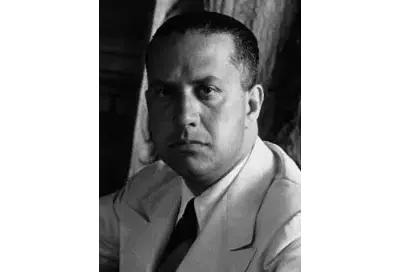
Gian Galeazzo Ciano, 2nd Count of Cortellazzo and Buccari was an Italian diplomat and politician who served as Foreign Minister in the government of his father-in-law, Benito Mussolini, from 1936 until 1943. During this period, he was widely seen as Mussolini's most probable successor as Duce.
