Gianni Agnelli Quotes
The factories were heavily bombed, but practically the construction work had been redone very quickly.
Agnelli, Gianni. Interview. Cold War, episode 3, "Marshall Plan, 1947-1952", CNN, 11 Oct. 1998.

At the time very few industrialists appreciated the value of particular workers and tended to think of them as interchangeable parts.


The automobile assembly lines of Detroit, had been planned to be converted to factories to produce a huge supply of planes, tanks, trucks and guns which were instrumental in winning the Second World War.

Hurricane Katrina had destroyed most of the infrastructure of New Orleans and the levees were breached.

“Arsenal of Democracy” is the famous FDR phrase whereby America was able to provide weapons for the other democracies to fight Fascism. At the time, the United States had the greatest manufacturing capability of the world. When Gingrich made this quotation, much manufacturing that had been done in America had moved offshore. However, one area that did not move offshore was military weapons manufacturing where the United States manufacturing capability was thriving but America was the largest arms manufacturer in the world and exported much of its weapons. This quotation is an example of a political technique called “conflation.” Gingrich took an area where there was legitimate concern about the nation’s loss of manufacturing and implied that the problem was affecting our military and defense capability as well which was not do at all. However, while most Americans knew of the manufacturing job loss, they did not know that the defense manufacturing was the strongest in the world. So they became even more alarmed at the problem of general manufacturing loss.

This section of the message was all about the Erie Canal that was under construction. Note that unlike today, where interest in public works and development is so localized, Clinton was extolling the virtue of developing the economy of the region and the nation. The money was all New York State money. The Federal Government would not fund the Erie Canal as they did not believe it was technically feasible to construct. See {624484} . Patriotism had a different meaning then.

The smaller German towns had not been targets for allied bombing and German censorship kept most Germans from realizing that the factories in the larger cities were being attacked. But the “rules of war” which the Germans had abandoned early in the war by bombing civilian targets in England and other European cities, required that only military targets be attacked. If a nation placed its factories or military bases in the midst of civilian populations, then the rules of war no longer protected the civilians. So the allies were within their rights by bombing the smaller towns where they targeted factories. However, this quotation is used by some critics to show that FDR’s motive was not the destruction of factories per se, but the breaking of German civilian morale. They argue that the allies were following the letter of the law, but not the spirit.


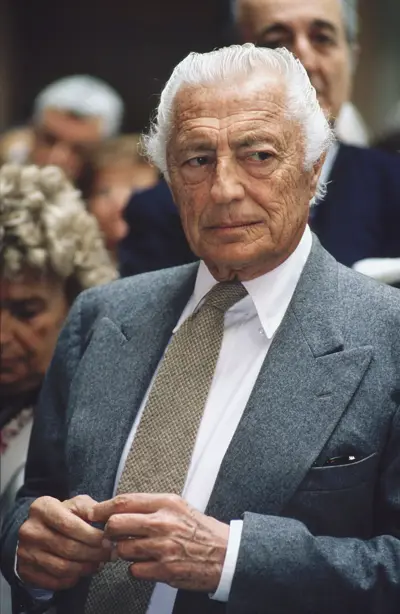
Agnelli was educated at Pinerolo Cavalry Academy, and studied law at the University of Turin, although he never practiced law. He joined a tank regiment in June 1940 when Italy entered World War II on the side of the Axis powers. He fought on the Eastern Front, being wounded twice. He also served in a Fiat-built armoured-car division in North Africa, where he was shot in the arm by a German officer during a bar fight over a woman. After Italy surrendered, due to his fluency in English, Agnelli became a liaison officer with the occupying American troops. His grandfather, who had manufactured vehicles for the Axis powers during the war, was forced to retire from Fiat, but named Valletta to be his successor. Gianni's grandfather died, leaving Gianni head of the family but Valletta running the company. Fiat then began producing Italy's first inexpensive mass-produced car.
