Jay Parini Quotes
The fact is, we need markers in life, whether we subscribe to a religion or not. And the major holidays, such as Christmas, serve to remind us of the turning world.
Parini, Jay. "Why atheists need Christmas." CNN, 24 Dec. 2014.

In the case of Christmas celebrations, in addition to the huge commercial consequences, there is tradition and religion involved which brings out non-monetary vested interests as well. This is true in England as well as America.
Christmas, it is sometimes legally argued, was ubiquitous in America and not just a Christian holiday. But as this quotation demonstrates, Christmas was not even celebrated by many of the Christian Churches as late as 1886. See {629844} for a similar example. A number of Protestant religions forbid the celebration of Christmas until relatively recently.


This absurd law was in existence for 22 years. But its vestiges lasted for over 100 years. It was not until the 1880s that it became fashionable to celebrate Christmas in Boston. The founding fathers were well aware of many early American laws interfering with religion and many religious laws interfering with those who did not believe a particular doctrine. The separation of church and state evolved from years of European abuses and American abuses as well.

This historical quote is important because it shows that there was great dissention about the celebrating of Christmas even among different Christian sects. Traditionally, the celebration of Christmas in a government building or school would have offended half the Christian population. In early America, Christmas celebration was legally prohibited in some states and required in others. This was one of the reasons that the Founding Fathers wrote the First Amendment into the Constitution. In modern times, some critics accuse the requirements that Christmas celebration in public facilities as being anti-Christian. But the problem has been with America since before the Constitution.

What is particularly interesting about this quotation is the date. As late as 1932, a governor of a major state, was declaring a State holiday for a particular religion, and in his official capacity was recommending fasting and paryer within a Christian context. Although the Proclamation violated the First Amendment, at the time few people would make the effort to go to court to challenge what had been a long tradition in America of declaring Christian Holidays official and the keeping of the Sabbath with criminal penalties for those who did not. However, it took time, effort and money to challenge these practices in court, and the majority community did not treat those people well socially who challenged custom as unconstitutional even when the courts agreed and restrained the practice. Even into the 21st century there were still a few legal battles about prayer in schools and promulgating Biblical passages in public buildings. From the late 1800s to the latter part of the 20th century, it was the Democrats who attracted most religious Americans while the Republicans were the party who advocated a non-traditional but Constitutional approach to religion. See {623322}


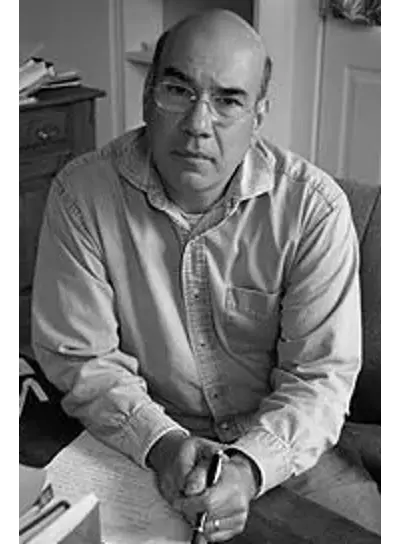
Jay Parini is an American writer and academic. He is known for novels, poetry, biography, screenplays and criticism. He has published novels about Leo Tolstoy, Walter Benjamin, Paul the Apostle, and Herman Melville.
