Wilbur Lucius Cross Quotes
Animated by an abiding faith in an ancient and modern custom, I appoint Friday, the 25th day of March, next, as a day of Fasting and Prayer, and I recommend that it be so observed by our people in their homes and in their places of public worship in remembrance of those ancestors who founded this commonwealth, and in communion of spirit with the Author of All Good in whom, Saint Paul said, we live, and move, and have our being.
What is particularly interesting about this quotation is the date. As late as 1932, a governor of a major state, was declaring a State holiday for a particular religion, and in his official capacity was recommending fasting and paryer within a Christian context. Although the Proclamation violated the First Amendment, at the time few people would make the effort to go to court to challenge what had been a long tradition in America of declaring Christian Holidays official and the keeping of the Sabbath with criminal penalties for those who did not. However, it took time, effort and money to challenge these practices in court, and the majority community did not treat those people well socially who challenged custom as unconstitutional even when the courts agreed and restrained the practice. Even into the 21st century there were still a few legal battles about prayer in schools and promulgating Biblical passages in public buildings. From the late 1800s to the latter part of the 20th century, it was the Democrats who attracted most religious Americans while the Republicans were the party who advocated a non-traditional but Constitutional approach to religion. See {623322}
Wilbur Lucius Cross, 1862-1948, Educator & Governor of Connecticut (Democrat), Proclamation, March 3, 1932
Sourced by: Eigen's Political and Historical Quotations


This is sd oppoded to in compsnies, universitiesd, governments, snf other insitutions.


He was communicating the Resolution of the Continental Congress.

The Supreme Court had ruled school prayer illegal. Many religious people were distressed and turned to the President:

The Pilgrims at Plymouth celebrated the first American Thanksgiving in 1621. George Washington had declared November 26, 1789 a day of thanksgiving. During the raging Civil War, President Lincoln had fixed the last Thursday of November to be a “Day of Thanksgiving”. Geary was following precedent and helping to make a tradition. However, there were those at the time who objected to the last sentence of the quotation as being overly sectarian and violating the separation of church and state doctrine. See

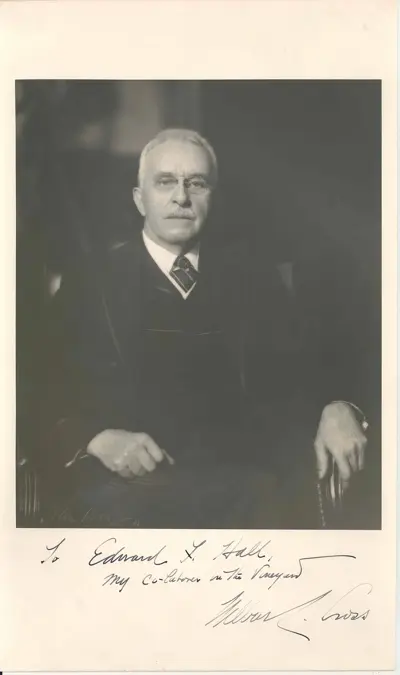
Wilbur Lucius Cross was an American literary critic who served as the 71st Governor of Connecticut from 1931 to 1939.
