Mahatma Gandhi Quotes
My religion teaches me that whenever there is distress which one cannot remove, one must fast and pray.
Gandhi, Mahatma. Young India. Navajivan Publishing House, 25 Sept. 1924, p. 317.

The Supreme Court had ruled school prayer illegal. Many religious people were distressed and turned to the President:


What is particularly interesting about this quotation is the date. As late as 1932, a governor of a major state, was declaring a State holiday for a particular religion, and in his official capacity was recommending fasting and paryer within a Christian context. Although the Proclamation violated the First Amendment, at the time few people would make the effort to go to court to challenge what had been a long tradition in America of declaring Christian Holidays official and the keeping of the Sabbath with criminal penalties for those who did not. However, it took time, effort and money to challenge these practices in court, and the majority community did not treat those people well socially who challenged custom as unconstitutional even when the courts agreed and restrained the practice. Even into the 21st century there were still a few legal battles about prayer in schools and promulgating Biblical passages in public buildings. From the late 1800s to the latter part of the 20th century, it was the Democrats who attracted most religious Americans while the Republicans were the party who advocated a non-traditional but Constitutional approach to religion. See {623322}


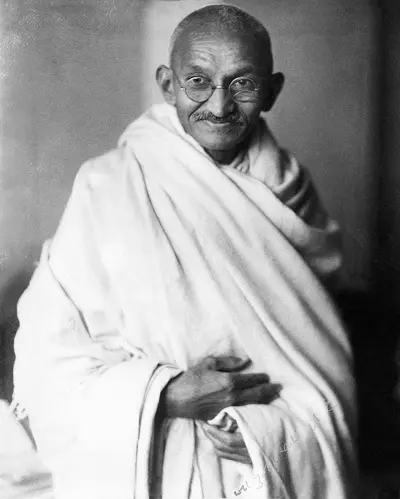
Mohandas Karamchand Gandhi was an Indian lawyer, anti-colonial nationalist, and political ethicist, who employed nonviolent resistance to lead the successful campaign for India's independence from British rule, and in turn inspired movements for civil rights and freedom across the world. The honorific Mahātmā (Sanskrit: "great-souled", "venerable"), first applied to him in 1914 in South Africa, is now used throughout the world.
