K. P. S. Gill Quotes
The entire civilized world, the world that has been painstakingly claimed by liberal democracy, must now accept the inescapable and inevitable truth: there can be no compromise with terrorism and its perpetrators. This is a lesson that India must also learn in its fruitless and suicidal quest for a ‘negotiated solution’ with mass murderers, or with their state sponsors in Pakistan. The world must understand, equally, that there is no geographical ‘locus’ of terrorism; terrorism is not just a threat to the limited areas where it temporarily finds the largest number of its victims.
K. P. S. Gill, Director General of the Punjab, India Police, Member of the Indian National Security Advisory Board, Founding President of the Institute for Conflict Management, Leader of the successful anti-terrorism forces in the Punjab, Statement on the September 11 Attack on the United States, September 2001
Sourced by: Eigen's Political and Historical Quotations


Pakistan and India have been at odds over Kashmir and other issues ever since British India was partitioned into the two states. There have been constant Pakistan incursions into India many of which are classic examples of terrorism. The Pakistani Prime Ministers and Presidents have maintained that this is against their policy and that the terrorists are beyond the control of the government. However, many of the other politicians and Muslim religious leaders advocate terrorism against India as part of Jihad. Even elements of the Pakistani military intelligence units have supported the terrorists. However, the Pakistan government has after September 11 have been very helpful against the many terrorists in Pakistan but they have been unable to control the many Islamic fundamentalists calling for jihad.

He argues that even if the concession to terrorists is seemingly small, there is much greater damage in that the minimal concession will also stimulate more attempts to gain other victories. See {629723} for his complementary statement on dealing with terrorists.

This famous quotation, from this important address, at such a critical time in history has been admired for years. Despite his great oratory, the next months were to see almost 2 million Indians of all faiths killed in what was probably the worst internecine violence in human history. Ironically, the politically motivated terrorism had stopped since all the decisions had been made. The motivation for the frightful atrocities that took place from then on was vengeance and fear of more vengeance." 1st Earl Mountbatten of Burma

Muslim League leaders wanted to stir up India's Muslims in order to prevent Indian Independence from Britain unless India were partitioned and the Muslims could have their own nation. At that point the British and the Congress Party of India—the majority political party were both starting to plan for independence. Most of the Muslim nationalists did not want to have any Muslims living in a Majority Hindu nation. To stop it, they first used fear claiming that when the British left, the Hindus would massacre all the Muslims. They galvanized the Muslims to first attack the Hindus to dissuade then from their attacks which at that point were imaginary except in the conspiracy theory of the Muslim League. The moral logic of this statement was similar, albeit not to the same bloody degree, as the famous quotation of Presidential Candidate Barry Goldwater on extremism." H. S. Suhrawardy

The Pakistani government and the army were two distinct and separate power centers. The military saw their major problem to be India, and coddled the Islamic terrorists to deploy them against India while claiming the military is not responsible for the attacks. The terrorism that is taught in many Madrassas schools, the government is reluctant to crack down on and get the terrorism out of the curriculum as they will lose many orthodox Muslim votes and the Islamic terrorists might assassinate any politician who threatend their power base. So Pakistan tried at the time to control the terrorist acts but would not do anything to weaken the terrorists.


Arab terrorists were raiding Israel. The United States, not yet having experienced September 11 was urging Israel not to retaliate and quietly allow diplomacy to operate.

ISIS captured a Jordanian pilot whose plane had crashed and they tortured him and burned him alive making and promoting a video of terrible war crime. At enormous cost Abdullah’s agents and soldiers tracked down those appearing in the video and killing them.


He served Presidents Reagan, Clinton, and both Bushes

The Taliban terrorists would try and kill, kidnap and hold people for ransom following a Muslim tradition dating back to the Barbary Pirates. While there is always pressure to negotiate to alleviate the immediate situation, the negotiation is in and of itself, a reward for the terrorism. Hence the general’s rigid view.


His balanced judgment and concern for American Casualties changed during the Iraq War over a decade later where he insisted on taking steady American casualties even after Saddam had been deposed and American troops were in the middle of a sectarian civil war.

The ‘Third Reich’ was Nazi Germany. Some scholars criticize President Reagan for disparaging and angering Al Qaeda and other Islamic organizations for no particular purpose. Others criticize him for, as this quote indicates, his not taking these organizations and their leaders seriously enough.


For years of the Arab-Israeli conflict, Palestinians would never negotiate with Israel over anything. Finally that barrier was broken and, the PLO became a negotiating party with Israel. However, the terrorist organization Hamas, had challenged the PLO for political control of the Palestinians and then took over the Gaza strip—part of the Palestinian territory. They then shot thousands of rockets into Israel, a clear act of war under international law. The Israelis then attacked the Hamas infrastructure and any building of facility where they had command or communications, meetings, trainings or stored weapons or ammunitions. The Gazans suffered many more casualties than the Israelis—about 20 to 1 ratio. Many other countries tried to broker a ceasefire which the Israelis agreed to but Hamas would not. The Israeli ambassador was asked on American television if Israel would be willing to negotiate on the larger issues of the conflict as they had negotiated with the PLO. This was his reply. The major problem was that the Hamas Charter had two clauses that made negotiations impossible. Hamas was committed to the destruction of Israel and would not agree that the Israel had a right to exist. Second, the Hamas charter called for the killing of Jews anywhere in the world—men, women and children. The Israelis asked what they would negotiate about given those two charter items and the Hamas terror history in killing as many Israelis as they could.
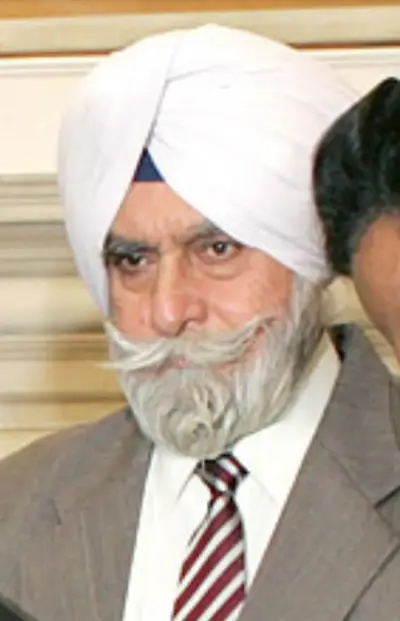
Kanwar Pal Singh Gill was an Indian Police Service (IPS) officer. He served twice as Director General of Police (DGP) for the state of Punjab, India, where he is credited with having brought the Punjab insurgency under control. While many see him as a hero, there are accusations that he and the forces under his command were responsible for human rights violations "in the name of stamping out terrorism." Gill retired from the IPS in 1995.
