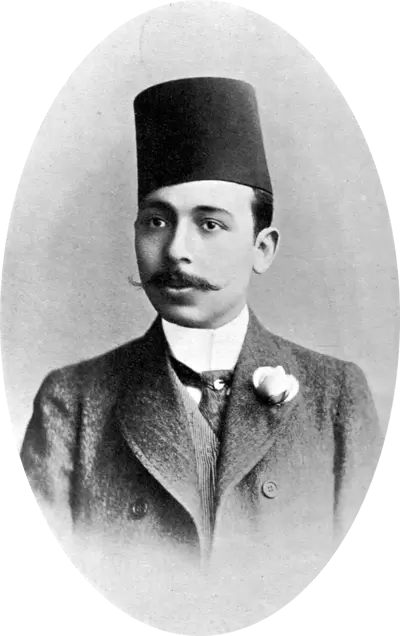
Mustafa Kamil Quotes
The English…continue threats to create, special courts to hear cases that have any bearing, large or small, on their interests... The setting up of such tribunals is a very serious violation of the law… A great sadness overcomes one at the thought that such a court could have been put in place by people who know anything at all about the rights of people and who live in the nineteenth century.
While it is true that the English wanted a legal system that would enforce modern western views of business and property, there was another major reason that the British wanted special courts. There were many British businessmen and civil service who insisted on their rights as Englishmen. These were not provided by traditional Islamic law (Sharia). On the other hand the British wanted to give the Egyptians a great deal of autonomy and the compromise was to have two legal systems—one for each culture. This is a solution that has existed many times and many places. The most common is when the U. S. has a military base in a foreign country and agreement is entered into as to what laws will govern the Americans. Even in the United States it was common for many years for Indians accused of a crime on an Indian reservation to be tried by the tribal council while whites accused of the same crime would be tried before a Federal Magistrate. Even today there are conflicts between the legal systems and traditions of some tribes and the United States Constitution which also protects all Indians.
Mustafa Kamil, 1874-1908, Egyptian Nationalist and Founder of the Watani Nationalist party, Quoted in Politics of Law and the Courts in Nineteenth-Century Egypt
Sourced by: Eigen's Political and Historical Quotations

This problem which was so well described over a century ago in Egypt, still vexes most of the Islamic world.


This is only one of many anti-American and anti-Israeli and anti-Semitic passages in the text. It is typical of much of the Wahhabi literature which also supports jihad and violence. Much of the funding for the Wahabbi comes from the Saudi Arabian Government and members of the Saudi Royal Family. There is total censorship in Saudi Arabia and nothing gets preached or printed if the Saudi government wishes otherwise. However, most of the imams in Saudi Arabia are Wahhabi and are paid by the government. The Royal Family’s only fear of losing power is if the Islamic clerics claim that the government is not supportive of Islam. They spend much money to buy their lack of opposition to the monarchy. The government position however is contrary to these hate-filled textbooks.


They were protesting the arrest and imprisonment of a Blogger whose Internet views on Islamic history were deemed “holding religion in contempt” a crime in Egypt as it is in most Islamic Countries. See {585059}. The call for action by the United Nations was based on the fact that all member states of the UN have guaranteed to provide basic freedoms including the freedom of religion and the freedom of speech. However many Islamic nations have filed an “understanding: with the United Stations that are unknown to most people that says that nothing is required that would be against Sharia—Islamic Law which does provide the death penalty for heresy.

She was born a Muslim herself and her life has been threatened by other, Muslims who are fundamentalists who are living proof or her point.
Kahn had been arrested during the War on Terrorism and then released without any charges being filed.
All modern legal systems conflict in some respects with a literal interpretation of the Koran which is the basis for the traditionalists view of Sharia—Islamic law. Therefore a student of modern law is learning things which go against Sharia as interpreted by fundamentalists. There was a time when Jewish and Christian American religious families were uncomfortable with studding modern law as there were contradictions with Biblical law. There are still a few.
Muslims are divided about the role of the Islamic religious courts. Some believed that these should be the only courts and should govern all law, religious and civil on the grounds that there are no real differences in Islam. Others believe, as Jammal put forth, that religious courts should only deal with religious and personal matters. Still others believe that these is no place in modern society for religious courts. This debate echoes the debate that took place in Christianity and Judaism, but the vast majority of these have concluded that there is no place for religious courts
In most of the world this is an accepted truism. However, where there is judicial independence as in the United States, Israel, Norway, England and other countries, those who appoint judges have little or no control over a judiciary that has lifetime tenure and a tradition of non-interference. The influence is limited to the appointment of a judge with a particular philosophy. However, in some countries, not only do the courts follow the lead of the government but if they do not the judges themselves might be jailed or worse. Borelli’s principle therefore holds there.