Charles Darwin Quotes
… the enforcement of public opinion depends on our appreciation of the approbation and disapprobation of others; and this appreciation is founded on our sympathy, which it can hardly be doubted was originally developed through natural selection as one of the most important elements of the social instincts.
Charles Darwin, 1809-1882, English Scientist, Ch. V : Natural Selection as affecting Civilised Nations, The Descent of Man, 1871
Sourced by: Eigen's Political and Historical Quotations


The religious theology of the Church of England had accepted the fact based on Newton’s work, that the heavenly bodies followed a set of scientific laws that were themselves created by God. However, the Church could not accept the same principle when it came to the different species of humans and lower order animals. Each species they believe was created with all its characteristics by God directly and species could not change, develop, regress, go extinct unless God specifically ordained that. It was this inconsistency that Darwin was afraid would produce religious attacks on him and his notions of natural selection while astronomy and physics was treated very different theologically. Darwin delayed publishing his findings for 25 years hoping to find a religious atmosphere that would treat biology much as physics and astronomy. It didn’t come and finally he published and took the heat, which actually was not very great. With the exception of some religious fundamentalists, most other elements of society welcomed and supported Darwin’s ideas which today we realize were among the most important ever put forth in the world of science.
Even today many people find Darwin’s views wanting because of the struggle and survival of the fittest concept implying that all creatures physically battle for survival and existance. But as this quotation illustrated, this was and is a very narrow view of Darwin’s concept of the struggle. Creatures fighting with each other is only a small part of this struggle. Larger parts are adapting to changed climate, versatility in food selection and extremely important a successful breeding pattern. The Thompson’s Gazelle is the most eaten animal on the African plains, and has virtually no defenses, but is an amazing breeder, with the shortest period of gestation of any mammal and the number of pregnancies per year. This little antelopes are thriving while they are eaten by most predators while the Lion, the strongest predator whom no animal will threaten, is becoming extinct.


Darwin initially did not use the phrase “survival of the fittest.” Herbert Spencer did in another context {627587}. With respect to evolution, some people mistakenly assume that this means that the strongest survive and the weak do not. But “fit” and “strong” are not synonymous. For example, the Lion is the strongest and top predator of the African Plain. An antelope, Thompson’s Gazelle, is tiny, not very fast, and has no defenses against the lions, cheetahs, leopards, hyenas, and wild dogs. He is the most eaten animal on the Plain. Yet this gazelle is growing in numbers and is thriving while the lions are becoming an endangered species. The Thompson’s gazelle are more fit for that environment because they breed so fast and at such a young age and have multiple babies. They are more fit than the lions because they breed more prolifically. Other animals are seemingly endangered in one environment (like beaver in the United States) but thrive in another (the Southern tip of Argentina)

Fisher, a brilliant scientist and mathematician, engaged in some major blunders like denying that tobacco had any relationship to lung cancer and other disease. This was another. His “conclusion” that the more “successful” members of society should breed in preference to the less successful. There are three major fallacies in his argument and that of other eugenics supporters other than the obvious ethical and moral problems. First, human success in any society is determined by both genetic and environmental factors. In general, it is currently impossible to know who the successful would be if environmental factors were equal. Second, our concept of success is quite narrow from an evolutionary point of view. The most successful humans might be those who produce that most children, or those who extend man’s habitat, or those who will be most resistant to a pandemic that will arise in the near future. Third, by the standards of much of English society at the time, the most “successful” people were the monarchy and heredity aristocracy, There was already too much inbreeding in these groups and increasing this groups breeding rather than others would not only weaken the species over time, but would limit the variation that is necessary for natural selection and further evolution of the human species.


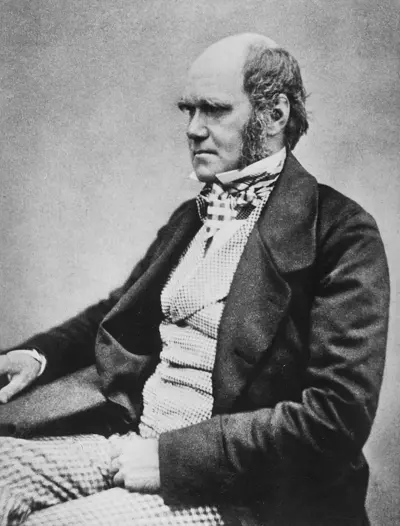
Charles Robert Darwin FRS FRGS FLS FZS was an English naturalist, geologist and biologist, best known for his contributions to the science of evolution.[I] His proposition that all species of life have descended over time from common ancestors is now widely accepted, and considered a foundational concept in science. In a joint publication with Alfred Russel Wallace, he introduced his scientific theory that this branching pattern of evolution resulted from a process that he called natural selection, in which the struggle for existence has a similar effect to the artificial selection involved in selective breeding. Darwin has been described as one of the most influential figures in human history, and he was honoured by burial in Westminster Abbey.
