John Adams Quotes
The divinity of Jesus is made a convenient cover for absurdity. Nowhere in the Gospels do we find a precept for Creeds, Confessions, Oaths, Doctrines, and whole carloads of other foolish trumpery that we find in Christianity.
John Adams, 1735-1826, 2nd President of the United States (Federalist, MA)
Sourced by: Eigen's Political and Historical Quotations

It was drafted by John Adams. Note that there was freedom of religion for Christians and not others. Of all the colonies, Massachusetts had the worst record of religious intolerance with Puritans controlling everything. Rhode Island and Connecticut were created by religious dissenters from Massachusetts. Adams had all he could do to get the Christian sects on an equal footing ratified. The other colonies however, insisted to a total freedom of religion clause which became the First Amendment to the national Constitution. Adams himself was a kind of secular, cultural Christian who did not believe in the divinity of Christ and other Christian doctrine. See {592695} to illustrate this.


In 1877 Wasburn was dropped from the List of Ministers by the Unitarian Church. He had become very critical of organized and orthodox religion of all kinds. He felt that literal interpretations of the Bible harmed religions as it made a mockery of God to claim His truths were the anachronistic and demonstrable falsehoods of the Book of Genesis. Today most Christians and Jews do not take the Old Testament Literally and in this sense Washburn was one of the early religious reformers of America. There is still a significant number of fundamentalist Christians and orthodox Jews who still believe in the literal truth of everything in the Bible.

This view was infuriating to the Rabbis, Priests and Immams of the time. Miracles and Scrip[ture were not determinatve Spinoza taught but the issue was did the docrine of the religion make sense. Spinoza’s ideas were considered so radical and dangerous that he was the only man in history who was excommunicated by the Catholics, the Jews and the Muslims.


Some of the founding fathers were deeply religious men while others were not so. Some varied in their believes at different times of their lives, and a number were not very favorable towards orthodox religion. At the time, Roman Catholic and Protestant churches were persecuting other religions throughout Europe and people were still being killed for their “heretical” beliefs. Most important to some of them, kings and other monarchs whom they abhorred, all at the time claimed the Divine Right of Kings and the established churches were the most important support for monarchs. At the time most organized religions were opposed to freedom of conscience and certainly opponents of separation of church and state. American churches tended to take on American values but were never given the chance to dominate the American government they way many religions had in Europe and the rest of the world.

Ingersoll was considered to be the greatest orator and political thinker of his day, but his overt atheistic views curtailed his elected political career.

Watchtower Bible and Tract Society of New York


The anti-intellectualism of many Protestant sects has its roots in this view of Martin Luther’s. The notion of reason as practiced by scientists as a hindrance to religion is not a new notion. Religious leaders have been trying to silence and discredit philosophers and scientists as long as there has been religion. Socrates was killed long before Christianity.


This was Jefferson’s definition of Christianity. However, for orthodox Christians, this was insufficient as Jefferson did not believe in the Trinity or in the divinity of Jesus. Nor did he believe in the Biblical narrative of most historical events. He was a Christian in the sense that he thought the ethics and philosophy of Jesus was as good as he had seen. See {629222}. In this sense, a number of the Founding Fathers were “Deists” including Jefferson’s conservative rival, John Adams.


Although a conservative, he had a great tolerance for and understanding of other points of view. For this some people thought him a radical.

Priests at the time were mostly uneducated. They would tend to make up their own Biblical stories that the people would prefer rather than the official church versions. The bishops wanted this practice stopped.
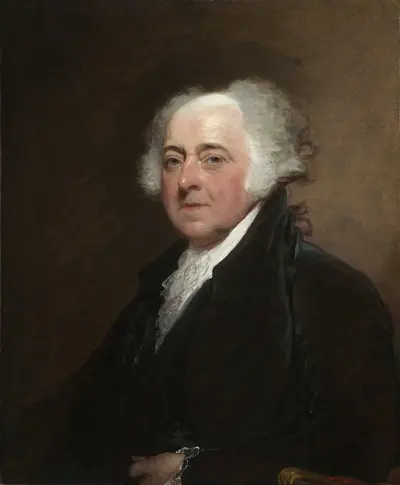
- Born: October 30, 1735
- Died: July 4, 1826
- Nationality: American
- Profession: US President, Stateman, Lawyer, Author
John Adams Jr. was an American statesman, attorney, diplomat, writer, and Founding Father who served as the second president of the United States from 1797 to 1801. Before his presidency, he was a leader of the American Revolution that achieved independence from Great Britain, and he served as the first vice president of the United States. Adams was a dedicated diarist and regularly corresponded with many important figures in early American history, including his wife and adviser Abigail Adams and Thomas Jefferson.
