Ferdinand Foch Quotes
The distribution of troops devoted to the defence of a place includes a garrison, an occupying force, numerically as weak as possible; a reserve as strong as possible, designed for counterattacking and for providing itself, at the moment it goes into action, with a security service which will guard it from any possible surprise.
Foch, Ferdinand. The Principles of War. Translated by Hilaire Belloc, Henry Holt and Company, 1920, p. 154.


Hamas, a terrorist organization controlling Gaza at that time had fired a thousand missiles into Israel. To stop them, the Israeli Defense Force using air power destroyed hundreds of Hamas facilities and homes of Hamas leaders. They also killed many Hamas terrorists, but at the same time there were also civilian casualties including women and children. Some critics of Israel formulated a moral equivalence between the two sides especially since the Israeli’s had anti-missile defense that exploded most of the missiles in flight. The Israeli Prime Minister explained the moral and ethical distinction. The Israeli’s did not strike any building without warning; they always notified the population in advance as to which target would be hit—something that no other nation had ever done in an armed conflict. However, Hamas forced many civilians to remain in the targeted buildings and almost all of the civilian casualties were to the civilians who Hamas decided to sacrifice. The facilities attacked were all places where Hamas had stored weapons or were command and control facilities, or were used for planning terrorist activities or were the residences of Hamas fighters of high rank. All these are legitimate targets under the rules of war, and the military force that uses them are responsible for clearing the civilians out. In this case, the kept them in, and in many cases sent them in, so that the Israeli military forces would be accused of injuring or killing innocent civilians.


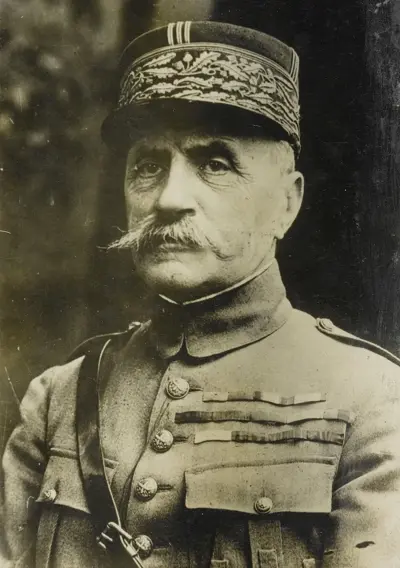
Ferdinand Foch was a French general and military theorist who served as the Supreme Allied Commander during the First World War. An aggressive, even reckless commander at the First Marne, Flanders and Artois campaigns of 1914–1916, Foch became the Allied Commander-in-Chief in late March 1918 in the face of the all-out German spring offensive, which pushed the Allies back using fresh soldiers and new tactics that trenches could not contain. He successfully coordinated the French, British and American efforts into a coherent whole, deftly handling his strategic reserves. He stopped the German offensive and launched a war-winning counterattack. In November 1918, Marshal Foch accepted the German cessation of hostilities and was present at the Armistice of 11 November 1918.
