Leo Tolstoy Quotes
The difference between real material poison and intellectual poison is that most material poison is disgusting to the taste, but intellectual poison, which takes the form of cheap newspapers or bad books, can unfortunately sometimes be attractive.
Tolstoy was a major opponent of censorship. However this quotation is frequently used to support the importance of censorship.
Leo Tolstoy, 1828-1910, Russian Writer & Philosopher, A Calendar of Wisdom 1908--January 1
Sourced by: Eigen's Political and Historical Quotations

The queen was a lot more sophisticated about the newspapers than politicians in the 21st century.


Even as late as the 1970s most media organizations did not feel any inhibition about having a spokesperson for a political movement or candidate comment about statements that were clearly untrue. The constant political criticism of the media produced this change and no matter how absurd or false a political statement is, most media will have a spokesperson for the lie appear on the program to repeat the lie. Both political parties are thereby encouraged to exaggerate or even lie as they will never by exposed by trusted journalists and can reduce all falsehoods to a “he says, she says.”


Saudi Arabian Newspaper. In March of 2002, a Saudi Arabian Professor at King Faisal University wrote an article for a Saudi newspaper that was a virulent slander of the Jews and their holy book. See {593096}. The article was published under full Saudi Arabian censorship which means that the government OK’d the contents. The editor claimed that he had been away when the offending articles had been published. The lie that Jews use the blood of non-Jews to bake their holy bread has been a staple of anti-Semitic propaganda through the centuries.


Vladimir Lenin. Lenin was echoing criticisms that were made the world over and even by some in the United States. However, his solution to have the press controlled by the ruling party just changed the cast of characters who were propagandizing and distorting the truth. Lenin was not able to offer a better solution nor were others. However, with enough affluence the capitalist society produced enough different publishers all competing that one did not dominate public opinion. With technology of TV and the Internet, the bar to entry is so small that almost anyone can be a publisher and find an interested market. In a way technology has solved much of the problem for capitalistic and totalitarian societies alike. In the latter, even censorship is not easy or feasible on a large scale.


Theodore Roosevelt was the Presidential nominee. See {634097} and {585962}--Samuel Johnson, for a 1758 version of this idea.


As hard as it is for us to imagine today, while her husband was President of the United States, the First Lady wrote a nationally syndicated newspaper column every single day with politics frequently the subject. While she usually agreed with the President, there were occasions where they seemed to not see things exactly the same. She tended to be more liberal than he. However, there were those who believed that when she criticized politicians, it was with FDR’s knowledge and blessing and she sometimes did his “dirty work.” Eleanor Roosevelt was one of the most influential people in the country—certainly more-so than any First Lady before and since.
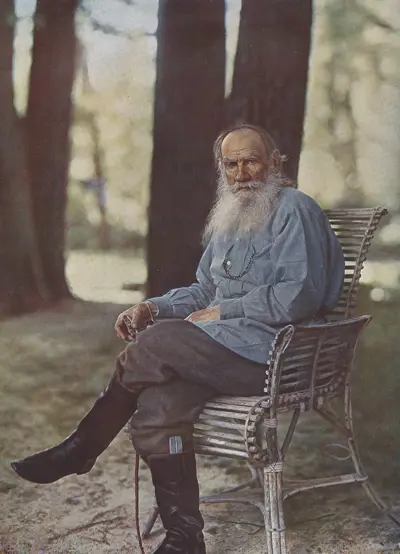
Count Lev Nikolayevich Tolstoy, 9 September, 1828 – 20 November, 1910), usually referred to in English as Leo Tolstoy, was a Russian writer who is regarded as one of the greatest authors of all time. He received nominations for the Nobel Prize in Literature every year from 1902 to 1906 and for the Nobel Peace Prize in 1901, 1902, and 1909. That he never won is a major controversy.
