Alan Keyes Quotes
The Declaration of Independence summarizes the civic principles of American life. It agrees with this biblical perspective when it affirms that we are all created equal and endowed by the Creator, God, with our unalienable rights.
Keyes, Alan. Our Character, Our Future: Reclaiming America's Moral Destiny. Zondervan, 1996.


Jefferson had deliberately modified John Locke’s phrase “life, liberty and property.


The preamble to this declaration of womens’ rights cleverly beginy s with the words of the Declaration of Independence with the single change that “all men” is replaced with “all men and women.” The message was clear. If the founders had a moral right and duty to revolt for these objectives women would be justified and duty bound to make similar efforts. That message terrified many men of the era.


The day that most changed the course of history was

Rights belong to the individual according to Rawls, not to the community of subgroups. Justice demands that the rights of the individual may not be sacrificed for the supposed benefit of the community or entire society. Not all agree with this, but it tends to differentiate Western cultural values from most others in the world where group, community or national benefit

This is a very important political, historical, and philosophical quotation. This is a view that is very common amongst many Americans—especially those who are religious. As a factual matter, it is not clear that ALL the founding fathers personally believed in the creator--God. All the views have never been discerned. However it is almost certain that the majority of the Founders so believed. The complication with taking this viewpoint too literally is that while our rights may have come from God, it is men who determined exactly what rights would be enumerated on our constitution. For example. the original draft of the Constitution did not include, the right to a free press, the right of due process, the right of being free from religious compulsion and others. Yet it passed. Then other men and women wanted more rights added and the Constitution was ratified on condition that the Bill or Rights would be incorporated as the first 10 amendments. There were other rights that were not explicitly mentioned. For example, there is no right to an education mentioned in the Constitution or any of the amendments. Blacks had no rights until additional amendments were passed. And later there was an amendment that denied Americans the right to drink alcohol. Then another that gave the rights back. There are rights that other nations have which we do not—ie the right to medical care. Which if these did God grant and which, not? So even if we assume that every one of the founding fathers not only believed in God, but believed the rights were all God given, we would still be in the practical dilemma of having to specify the language of each right and always to, by amendment, adding additional rights or modifying or even deleting older rights. Many believe that Americans were divinely inspired when we added (or changed) rights. Others, not. However, regardless, we must go through the same procedures of enumerating American rights and amending the constitution. So the process is the same for both those who believe that our rights come from God and those who do not. To change rights, we need the action of Americans divinely inspired or otherwise, but they can and have been changed. For example, before 1963 Americans did not have a right to use birth control devices. After the Supreme Court Griswald v. Conn. We did and now have a right to use birth control devices. The mode that rights are manifested, defined, enumerated and implemented is a political one—one that in our American system allows us all to implement that system whether or not we believe that our rights come from our Creator.


The opening line of the North Vietnamese Declaration of Independence was a quotation of Thomas Jefferson’s in the American Declaration of Independence. What is even more interesting is that Ho Chi Minh who wrote it asked for and received help in checking his translation from an American agent of the OSS---Office of Strategic Service, precursor to the CIA. While Ho adopted much from the American Democratic concepts, he did not include free elections of multiple party candidates, freedom of speech, travel, or many other basics.


Jefferson’s original was: We hold these truths to be sacred and undeniable that all …
Jefferson, who drafted the declaration, asked Franklin to edit it—see {604295}. This phrase was suggested as a replacement for Jefferson’s original: “We hold these truths to be sacred and undeniable.”


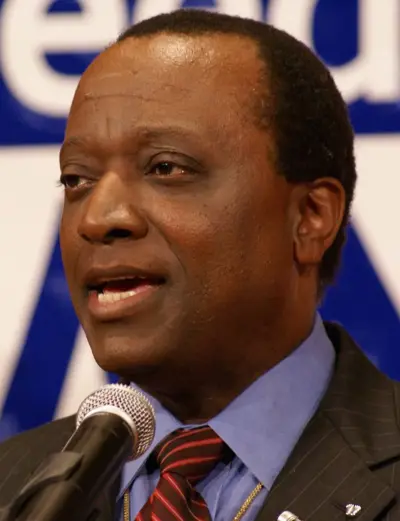
Alan Lee Keyes is an American conservative political activist, pundit, author and former ambassador.
