Rich Lowry Quotes
The debate about the war seems pretty robust and free. Many publications, from the New Yorker to the Nation, feel perfectly comfortable printing anti-American articles and that's fine. That's what the First Amendment is all about.
Lowry, Rich. "The Free Press in Wartime." National Review, National Review Inc., 2004.


After being criticized for printing a ship captain's advertisement that excluded clergymen as passengers, local clergy threatened to boycott the Gazette and take no printing jobs to Franklin. Due to the resulting clamor, Franklin published this "apology," i.e. apologetics, a statement of his philosophy as a printer, and concludes by explaining how and why he printed the offending handbill and why he should not be censured for the act.


Vladimir Lenin


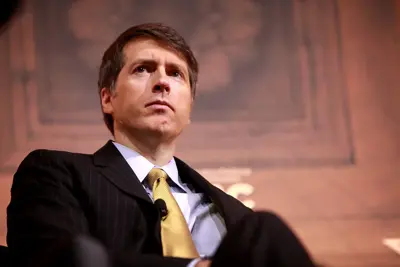
Richard Lowry (/ˈlaʊri/; born 1968) is an American writer who is the editor of National Review, an American conservative news and opinion magazine. Lowry became editor of National Review in 1997 when selected by its founder, William F. Buckley, Jr., to lead the magazine. Lowry is also a syndicated columnist, author, and political analyst who is a frequent guest on NBC News and Meet the Press. His most recent book, The Case for Nationalism: How It Made Us Powerful, United, and Free, was released in 2019.
