Philip Kaufman Quotes
The danger is not so much in the economic structure of a society but in its intellectual structure.
Kaufman, Philip. Philip Kaufman: Interviews. Edited by Annette Insdorf, University Press of Mississippi, 2012.


The debate about equality and meritocracy often hinges on whether equality in a democracy is equality of results or equality of opportunity.


Most pressure for political correctness comes from the center or the left. On this area however, pressure to avoid speaking of this comes from left and right. The left is concerned that by discussing the reality the poorer performing subgroups will be stigmatized and public behavior will make the situation worse. The right would prefer that there is little or no political dialogue regarding the huge differences in outcome in America where individual ability and effort seems to play such a large part of the differential. I addition, they see the making of these distinctions as the beginning of class warfare.

After Roosevelt, most eras of American politics more or less followed the pattern Roosevelt described herein as a “calamity”, with the anger becoming more or less intense. Jefferson thought that these were natural divisions of politics in all societies--{604810}. The thing that masked this for years was race and slavery. In Lincoln’s time there were liberals and conservatives in both parties if race were ignored. In Theodore Roosevelt’s era, he, Taft and others were generally liberal reformers, while a large number of Republicans were conservative supporters of the status quo. Some democrats were radical reformers like William Jennings Bryan while others were arch conservatives. Until 1964 and the Civil Rights Act there were many conservatives in the Democratic Party, but almost all switched to the Republican Party in anger. The Republican conservatives tended to drive the Republican liberals out of the party and for the last part of the 20th century Roosevelt’s “calamity” well described the American political scene, and the anger increased carrying partisan bitterness into the 21st century.


The term “rugged individualism” was used at the time be very conservatives and the very wealthy to describe business leladers with words that had very good public connotations. They argued that it would be undesirable to curtail their individualism that was so important by any government regulations or laws that would limit what the business leaders could do. However, the reality was that these very successful and powerful “rugged individualists” had regimented most everyone else—employees, consumers, and small businessmen who might sell them services or products. To Tugwell, if the wealthy and powerful few had no restrictions on their individualism, there would be precious little individualism for most of society. He sought a balance of regulating the individualism and prerogatives of the few somewhat in order to allow the vast majority of people to be able to have individuality as well.
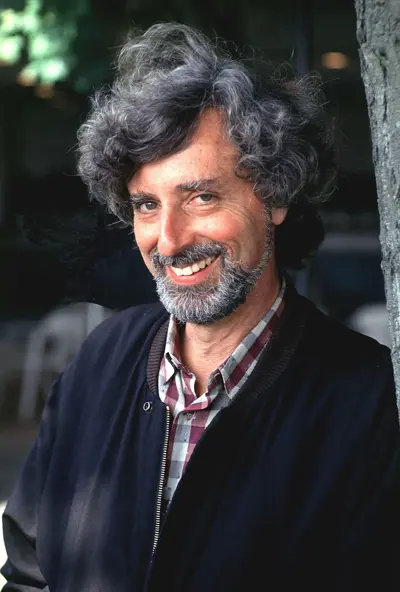
Philip Kaufman is an American film director and screenwriter who has directed fifteen films over a career spanning more than six decades. He has been described as a "maverick" and an "iconoclast," notable for his versatility and independence. He is considered an "auteur", whose films have always expressed his personal vision.:1
