Francis William Aston Quotes
The cosmical importance of this conclusion is profound and the possibilities it opens for the future very remarkable, greater in fact than any suggested before by science in the whole history of the human race.
Aston, Francis William. "Mass Spectra and Isotopes." Nobel Lectures, Chemistry 1922-1941, Elsevier Publishing Company, 1966, p. 20.


Sir Humphry was a religious man, and yet he focused on one of the great differences between science and religion. The latter is presumed true and eternal by its faithful, while science is never such. No truth is eternal in science and rarely does a scientific “truth” last 100 years without modification, elaboration or additional complexity. This is one of the reasons that scientists make poor witnesses at Congressional hearings. They are never certain of anything if they are good scientists. Witnesses from other fields testify with much more certainty as they are motivated by self interest or ideology where doubt is unacceptable.


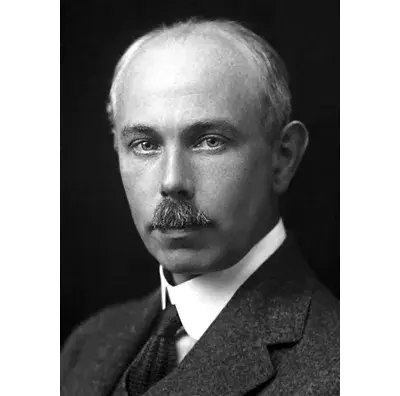
Francis William Aston FRS was an English chemist and physicist who won the 1922 Nobel Prize in Chemistry for his discovery, by means of his mass spectrograph, of isotopes in many non-radioactive elements and for his enunciation of the whole number rule. He was a fellow of the Royal Society and Fellow of Trinity College, Cambridge.
