Norman Angell Quotes
The convictions of the multitudes … are sincere convictions. They are, as we know, sometimes disastrously erroneous; but they are also disastrously honest.
Norman Angell, 1872?-1967, British Member of Parliament, Economist and Writer, Nobel Peace Prize Laureate, Nobel lecture, June 12, 1935
Sourced by: Eigen's Political and Historical Quotations


This quotation is almost always given as if it were Alcuin who advocated listening to the people, when actually his view was just the opposite. See William Tecumseh Sherman for a more modern expression of the same view. Also, Walter Reynolds {32317} for an opposite view, but using a similar phrase. Note that since he was referring to what "the people" say, the quote must have been in common usage in the 9th century. For the earliest known use of the statement in Western civilization, see Hesiod {603399}.


Later American politicians expounded the same view. See Otis Singletary {585931} and Eddie Bernice Johnson {605259}. The earliest expression of the idea can be found in the Bhagavad Gita {594723}


3rd Earl Russell of Kingston


If someone repeats a lie, you can show them the logic and facts of the situation and persuade them often. But if they are ideologically wedded to an idea, it is difficult if not impossible to change their mind, as their belief is an ideology, not a conclusion.


He changed his views a great deal since this time when he was only 28 years old and the IRA Chief.

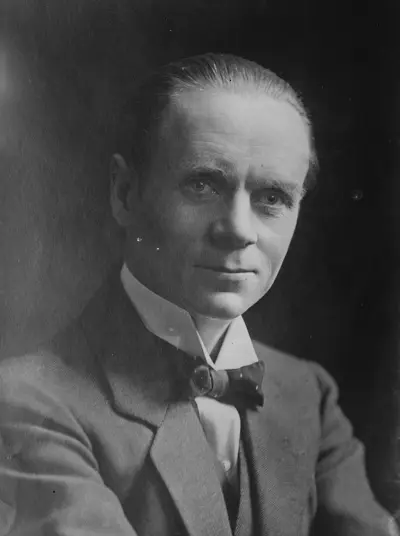
Sir Ralph Norman Angell was an English Nobel Peace Prize winner. He was a lecturer, journalist, author and Member of Parliament for the Labour Party.
