Natan Sharansky Quotes
The conviction that freedom is a universal desire is not the property of any political camp. ... Yet those who hold it remain a precious few, outnumbered many times over by the skeptics who don't.
Natan Sharansky, Russian Dissident & Israeli Writer and Politician, The Case for Democracy, 2004
Sourced by: Eigen's Political and Historical Quotations


See {613385} ,{588836}, {613381}, {613384}.


Many Republicans in the early 21st century signed a “no new tax” pledge to Grover Norquist, a Republican Party Boss, which he kept in his personal safe. However, many criticized the practice in that the private party pledge could easily conflict with the Oath the legislators took to the Constitution.

Socialism in its then pure form had the state owning and controlling all the major assets of the nation. In this sense it was contradictory to individual freedom and hence democracy. However, in the years after Tocqueville’s quotation and the industrial revolution, socialism has gradually moved away from state ownership and operations of all institutions and resources. Democracy has tended to adopt a more regulatory view to control the excesses of unbridled capitalism. The range of democratic nations by the 21st century encompassed differences but some were described as “social democracies” and had some state ownership but were basically capitalistic economies. Even the self-described Communist nations had become heavily capitalistic albeit with less political freedom. At the same time, even the United States—the epitome of 21st century capitalism, owned and controlled a few of the resources and means of production and tended to regulate the others—a substantial difference from the American democracy which Tocqueville studied.

Gingrich was one of the most polarizing political figures of his era. He conflated liberals with intellectuals, and people he called “elites” creating a form of class warfare where the class divisions were educational and cultural instead of socioeconomic.


Many of the communist governments of the world described themselves as “democratic socialism.”

He was subpoenaed by the House Un-American Activities Committee where he was accused of being a Communist which he eloquently denied starting with this statement. He died of a heart attack 3 days later. However, most historians agree that White passed classified information to the Russians. He was accused of being a Communist, but there was never any evidence of that. Some people believe that he was a spy for the Russians and committed espionage, but others disagree observing that White was very much his own man and felt that much information that was classified never should have been. White substituted his own judgment, it is believed, about what could be given to the Russians for the security system. He was an admirer of what Russian socialism had accomplished economically, educationally and medically since the 1917 revolution deposing the Czar. Russia had been a valuable military ally, which had taken the brunt of both military and civilian casualties in WWII. White’s economics were certainly not Marxist but very much Keynesian.


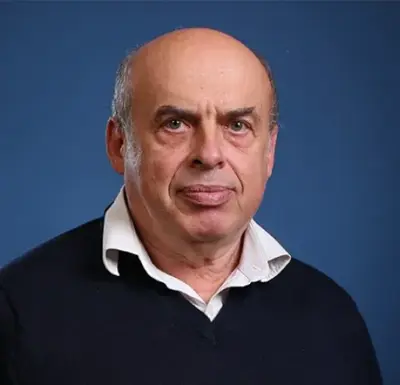
Natan Sharansky is an Israeli politician, human rights activist, and author who, as a refusenik in the Soviet Union during the 1970s and 1980s, spent nine years in Soviet prisons. He served as Chair of the Executive of the Jewish Agency from June 2009 to August 2018. Natan Sharansky currently serves as the Chairman of the Institute of the Study of Global Antisemitism and Policy (ISGAP) (www.isgap.org).
