George T. Conway III Quotes
The Constitution sets out no standards for granting pardons. They require no consent from Congress, and courts can't second-guess them.
Conway, George T., III. "Opinion: Trump’s pardons make a mockery of the justice system." The Washington Post, 19 Feb. 2020.

When asked for his position on abortion, candidate Bush answered:. Nine years later, President Bush proposed a constitutional amendment to overturn the Supreme Court's ruling on flag desecration.


Referring to the Brown v. Board of Education, the Topeka, KS, Supreme Court school desegregation decision:


The United States government had for many years deposited all its funds in a single private bank, the Bank of the United States. In 1833, President Andrew Jackson, without any congressional authorization, ordered the federal deposits to be distributed among state banks instead. The Senate was furious and passed the first resolution of censure of a President in United States history:. Carried by a vote of 26 to 20. Four years later a pro-Jackson Senate majority voted to expunge the resolution.

Cummings was arguing against a Constitutional amendment. His alternative led to Roosevelt's court packing schema.


The view that the Supreme Court was the final arbiter of constitutional controversies was not held in early America.
Soon after Jackson's reelection, delegates from South Carolina, led by John C. Calhoun, moved quickly to declare "null, void, and no law" the Tariff Act of 1832. The president's reaction to the Ordinance of Nullification was swift.

On why the President should not be given the right to go to war without the approval of Congress:

The major issue was whether Congress and the Federal Government could make laws and regulate the communities of people who had settled in the new territories. The argument that Young made was that unless a power was specifically enumerated in the Constitution as being granted to the Federal Government it was not. Most Constitutional scholars believe that there were powers implied by the enumerated powers such as the right for the Federal Government to regulate child labor or the safety of nuclear power plants which of course were never mentioned in the Constitution. At the same time anti Mormon sentiment led many to extend Federal Regulation to Mormons that had not been extended to other people. Plural marriage was one of those major value issues. The Mormons were very innovative in setting up institutions like buying cooperatives and systems for medical care and welfare, and many of these threatened the then established economic principles of many men of power and wealth. See {614881} for Brigham Young’s similar view.


Powell was the Secretary of State and Addington kept advising the administration that as long as the President was acting in defense of the country in his capacity as Commander in Chief, he did not have to obey any existing laws that had been Constitutionally passed which in the opinion of the President restricted or limited the President or the executive branch. Addington was an attorney and Assistant to the Vice President, but he was given much responsibility for administration policy. Powell the Secretary of State of the Administration could not have disagreed more and although most politicians including Republicans disagreed with the Addington thesis, Powell was one of the few Republicans to criticize the Addington position.

Hatch was the chairman of the Senate Judiciary Committee at the time.


See {635809} for an additional view on this act.
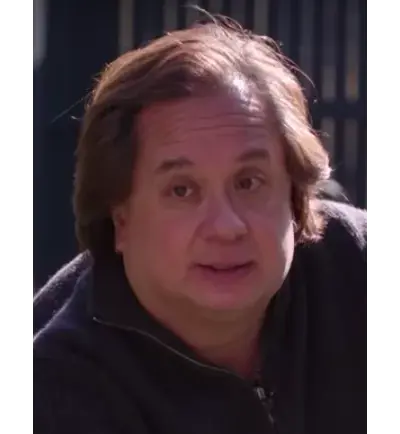
George Thomas Conway III, is an American attorney. Conway was considered by President Donald Trump for the position of Solicitor General of the United States, and a post as an assistant attorney general heading the Civil Division at the United States Department of Justice, but withdrew himself from consideration.
