Friedrich Hayek Quotes
The conservative feels safe and content only if he is assured that some higher wisdom watches and supervises change, only if he knows that some authority is charged with keeping the change "orderly.
Hayek, Friedrich A. The Constitution of Liberty. University of Chicago Press, 1960, p. 400.


Democracy and a republican form of government ran counter to the Chinese customs and failed, with Yuan Shikai taking all power—the “immemorial custom” of the autocratic Mancho and earlier Chinese dynasties. This failure of republican government in China so colored the future Chinese political leadership that both the Communists and Chang’s Kuomintang Nationalist anti-communists were both dictatorial and autocratic with great power lying in military hands. It was only in the later years of the 20th century that the Nationalists began to have a real democracy and although the Communists became avid capitalists and loosened up in terms of economic freedom, they did not feel the Chinese masses were ready to accept anything but the authoritarian political system that was the Chinese “immemorial custom”. They would not risk another collapse of modern government and all the factions fighting for control as in the Republic failure.


5th Earl of Rosebery. At this point in history, America was growing rapidly, but had not yet become a dominant superpower. Rosebery was prescient enough to realize that although England was the great superpower of the time, the very conservative values were holding the nation back. He saw America as the model, even when England was still the dominant empire in the world.
This statement is very revealing in that it illustrates the attitude of the establishment of most developing nations. Traditional change is OK as long as it is not does transformational—ie as long as it does not make any meaningful changes. But modernization requires transformational change; without it there is no major reform and all institutions and power structures remain in their positions.
This is the ultimate extreme of conservatism which literally means to conserve what is. Salisbury argues that even if you truly believe that the status quo is bad, you should keep it as the risk of change and unexpected consequence is so great that it is not worth the risk. Interestingly, this is the same mode of thinking which created the command in the Koran for Muslims to live with a terrible Caliph or ruler (unless he is a blasphemer or heretic) rather than risk the instability of regime change. See {590195} and {593076} as examples.


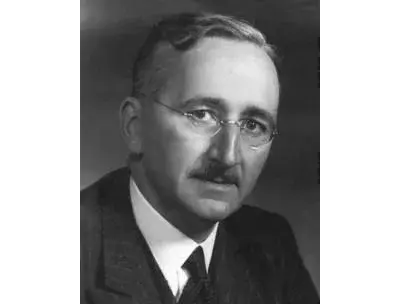
Friedrich August von Hayek CH FBA, often referred to by his initials F. A. Hayek, was an Austrian-British economist and philosopher who is best known for his defence of classical liberalism. Hayek shared the 1974 Nobel Memorial Prize in Economic Sciences with Gunnar Myrdal for his "pioneering work in the theory of money and economic fluctuations and [...] penetrating analysis of the interdependence of economic, social and institutional phenomena". His account of how changing prices communicate information that helps individuals co-ordinate their plans is widely regarded as an important achievement in economics, leading to his Nobel Prize.
