Mark Twain Quotes
I'm all for prosperity. It's change I object to.
Twain, Mark. Mark Twain's Speeches. Harper & Brothers, 1910.


5th Earl of Rosebery. At this point in history, America was growing rapidly, but had not yet become a dominant superpower. Rosebery was prescient enough to realize that although England was the great superpower of the time, the very conservative values were holding the nation back. He saw America as the model, even when England was still the dominant empire in the world.

Historically, there are two situations where major changes are made in societies: 1) After great crises—wars, depressions, plagues etc. 2) At times of great prosperity when people are feeling very generous and magnanimous.


Democracy and a republican form of government ran counter to the Chinese customs and failed, with Yuan Shikai taking all power—the “immemorial custom” of the autocratic Mancho and earlier Chinese dynasties. This failure of republican government in China so colored the future Chinese political leadership that both the Communists and Chang’s Kuomintang Nationalist anti-communists were both dictatorial and autocratic with great power lying in military hands. It was only in the later years of the 20th century that the Nationalists began to have a real democracy and although the Communists became avid capitalists and loosened up in terms of economic freedom, they did not feel the Chinese masses were ready to accept anything but the authoritarian political system that was the Chinese “immemorial custom”. They would not risk another collapse of modern government and all the factions fighting for control as in the Republic failure.


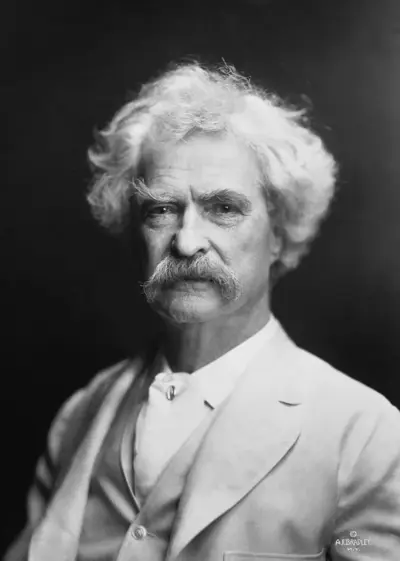
Samuel Langhorne Clemens, known by his pen name Mark Twain, was an American writer, humorist, entrepreneur, publisher, and lecturer. He was lauded as the "greatest humorist the United States has produced," and William Faulkner called him "the father of American literature". His novels include The Adventures of Tom Sawyer (1876) and its sequel, the Adventures of Huckleberry Finn (1884), the latter often called "The Great American Novel".
