Carl von Clausewitz Quotes
The Conqueror is always a lover of peace: he would prefer to take over our country unopposed.
von Clausewitz, Carl. On War. Translated by Michael Howard and Peter Paret, Princeton University Press, 1984, p. 370.


In this case, he was referring to the situation with the Barbary Pirates who had an incredible extortion racket going in the Mediterranean. If nations would pay them an annual sum each year, they would not attack and seize merchant ships of that country and sell the ships and goods while holding the sailors for ransom. Jefferson favored and authorized war—a naval attack which for many reasons the European nations had not done (they just paid the tribute). Then a peace treaty was finally signed—the first American Treaty.


Theodore Roosevelt was the Presidential nominee. Johnson was a leader of some members of Congress some of whom were extreme isolationists and some of whom were Nazi sympathizers and Hitler admirers. When the Japanese attacked Pearl Harbor later that year, Germany, fulfilling its treaty with Japan, declared war on America, Johnson’s group no longer mattered. Before WWII most Republicans were opposed to Defense Spending and accused the Democrats of being war hawks. After WWII, they flip flopped and became more hawkish than the Democrats who they accused of being soft on defense for years thereafter. See {631380} for President Roosevelt’s different view.


In the play the two characters are a Russian and American disarmament negotiator:


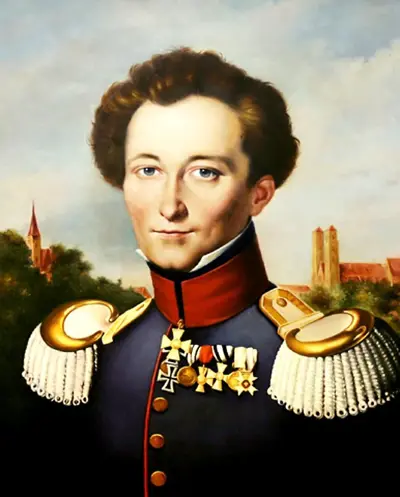
Carl Philipp Gottfried (or Gottlieb) von Clausewitz was a Prussian general and military theorist who stressed the "moral" (meaning, in modern terms, psychological) and political aspects of war. His most notable work, Vom Kriege transl. On War, was unfinished at his death.
