James A. Garfield Quotes
The civil service can never be placed on a satisfactory basis until it is regulated by law. For the good of the service itself, for the protection of those who are entrusted with the appointing power against the waste of time and obstruction to the public business caused by the inordinate pressure for place, and for the protection of incumbents against intrigue and wrong.
At the time, Civil Service jobs were all appointed and the government employees could be fired at will regardless of whether the did their jobs well or not. The President and the Cabinet members spent huge amounts of time dealing with people looking for appointments (“place”)
and hearing complaints from civil servants who had been fired unjustly. Two years later, Congress passed the legislation. See 1.
James A. Garfield, 1831-1881, 20th President of the United States (Republican, OH), Inaugural Address, March 4, 1881
Sourced by: Eigen's Political and Historical Quotations

This law established the Civil Service Commission and for the first time in American History required open examinations for the appointing of government employees. Japan had required examinations for civil service for hundreds of years. President Garfield had called for such legislation in his inaugural address {586804} 2 years earlier. This was the legislation that implemented it.


“Assessing” did not mean evaluating. It described a process where each civil servamt was “assessed” an amount of money—based on his salary—that was to be paid to the Political Party that appointed him. The specific corrupt process of “assessing” he described well in {629355}. Roosevelt had worked at the local, state and Federal levels of government. All had tolerated a great deal of this form of corruption. At the time this article was written, the Federal reforms had begun to take effect. Some states and local governments followed, but the average level of corruption being most at the local level, next at the state level, and least at the Federal level, as TR observed then was essentially the same into the 21st century. Government corruption was generally less, but relatively it was worst at the local level and least at the Federal level. At the end of the 20th century for example, every Kentucky County Commissioner except 1 was convicted and jailed for taking bribes and kickbacks from highway and road construction contractors. Corruption at the Federal Level was less.


While the George W. Bush administration polarized the civil service by appointing ideological zealots without regard to competence and qualifications, Conservative Australian Prime Minister John Howard, had actually done the same thing before him.
“Public charities” were government services that were like those provided by private charities: relief, food, housing etc. ie “welfare”


See Charles James Fox, John Milton, Jeremy Bentham, George Mason, Grover Cleveland, Benjamin Disraeli and Woodrow Wilson for similar expressions of this idea.


First woman to receive the British Order of Merit. Nightingale was a great and prolific writer, and nothing attracted her ire worse than bureaucracy. See {614057}.

The notion that government had to be structured and limited was then utilized a century later in the American Constitution and Bill of Rights. Spinoza was one of the most feared intellectuals in human history—feared that is by the established power structures. He is the only known person who was excommunicated by the Catholics, the Jews and the Muslims—all were forbidden to read his works. He was the enemy of authority and advocated personal reason as the guide for men.
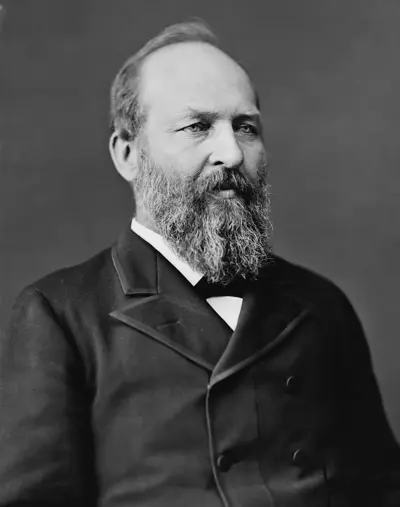
- Born: November 19, 1831
- Died: September 19, 1881
- Nationality: American
- Profession: President
James Abram Garfield was the 20th president of the United States, serving from March to September 1881. Garfield was shot by an assassin four months into his presidency and died two months later. He is the only sitting member of the United States House of Representatives to be elected to the presidency.
