Nicholas M. Butler Quotes
The characteristic feature of the experiment in Russia ... is not that it is communist, but that it is being carried on with a plan in the face of a planless opposition.
Nicholas M. Butler, 1862-1947, President, Columbia University, Nobel Laureate in Peace, Republican Party Leader, Commencement address, Columbia University, June 11, 1931
Sourced by: Eigen's Political and Historical Quotations

This quotation illustrates White’s favorable view of Russia. Note his use of the “it works” phrase which he picked up from Stefens’ famous quote {634892}. At the time the Soviet Union had been perceived by many economists to have been a great economic improvement over Czarist Russia. And over all, Russia which in 1917 was an economic basket case, had become one of the stronger states in Europe although the Russian people paid a horrendous price. Most historians agree that White passed classified information to the Russians. He was accused of being a Communist, but there was never any evidence of that. Some people believe that he was a spy for the Russians and committed espionage, but others disagree observing that White was very much his own man and felt that much information that was classified never should have been. White substituted his own judgment, it is believed, about what could be given to the Russians for the security system. He was an admirer of what Russian socialism had accomplished economically, educationally and medically since the 1917 revolution deposing the Czar. Russia had been a valuable military ally, which had taken the brunt of both military and civilian casualties in WWII. White’s economics were certainly not Marxist but very much Keynesian. He was subpoenaed by the House Un-American Activities Committee where he was accused of being a Communist which he denied (see {634907}). He died of a heart attack 3 days later.


Harriman at that time was the United States Ambassador to Russia and one of President Roosevelt’s closest advisers. There were those who claimed that the Roosevelt administration was very naïve about the potential danger of Stalin. This statement as well as others like it, show that the administration was not so naïve and ignorant.


This was a big factor that made the Red Scare so damaging.


This was a very important quotation in that Sartre was a very influential liberal philosopher and when he condemned Russian communism, many other liberals opposed communism, and those who had already felt vindicated in their decision.
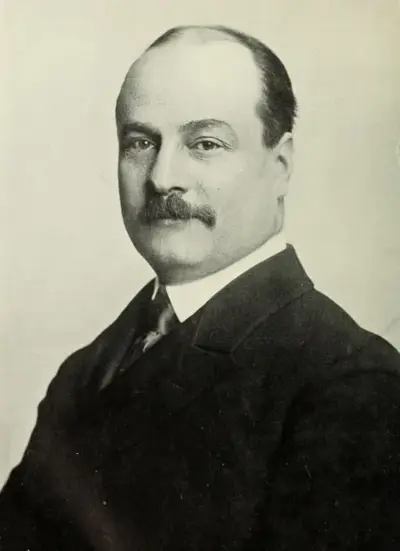
Nicholas Murray Butler was an American philosopher, diplomat, and educator. Butler was president of Columbia University, president of the Carnegie Endowment for International Peace, a recipient of the Nobel Peace Prize, and William Howard Taft's running mate in the 1912 United States presidential election. He became so well known and respected that The New York Times printed his Christmas greeting to the nation every year.
