Edward Snowden Quotes
The chairs [in Congress] are part of the "Gang of Eight." They get briefed on every covert-action program and everything like that. They know where all the bodies are buried. At the same time, they get far more campaign donations than anybody else from defense contractors, from intelligence corporations, from private military companies.
vanden Heuvel, Katrina, and Stephen F. Cohen. "Edward Snowden: A 'Nation' Interview." The Nation, 28 Oct. 2014.


about Iraq possessing weapons or mass destruction This is the one of the kind of statements which many felt were prevarications to justify the President’s desire to invade Iraq. See {618461} for an example of the reaction that was generated.

Forrestal was outraged when special interests and lobbies pressured Congress and the White House regarding the policies—especially the budget and spending policies of the Department of Defense. Ironically, he was accused of endangering national security by many—especially Southerners. He had racially integrated the Navy while Secretary of the Navy and as Defense Secretary he wanted to integrate the armed forces completely. The argument against integration was that unit cohesion and military effectiveness would decrease. If nothing else, large numbers of servicemen would not want to be in close proximity to Blacks and his would impair their military effectiveness. The same arguments were later made about the integration of women and then gays.


He was referring to the famous Eisenhower quotation of 1961. See {641114}.


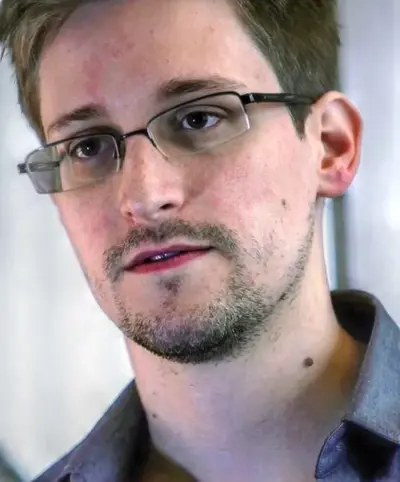
Edward Joseph Snowden is a former computer intelligence consultant who copied and leaked highly classified information from the National Security Agency (NSA) in 2013 when he was a Central Intelligence Agency (CIA) employee and subcontractor. His disclosures revealed numerous global surveillance programs, many run by the NSA and the Five Eyes Intelligence Alliance with the cooperation of telecommunication companies and European governments, and prompted a cultural discussion about national security and individual privacy.
