Ralph Waldo Emerson Quotes
The castle which conservatism is set to defend is the actual state of things, good and bad.
Ralph Waldo Emerson, 1803-1882, Poet & Essayist, Quoted in New York Times Magazine, March 4, 1956
Sourced by: Eigen's Political and Historical Quotations


The Republicans had been badly beaten in the 2012 Presidential Election. Many attributed the loss to the dissatisfaction of the electorate with the Republican ideas which had become more and more conservative in recent decades. Others, like Rubio, wanted to maintain the existing ideas which were very different from the Republican ideas earlier when they won more elections.


Democracy and a republican form of government ran counter to the Chinese customs and failed, with Yuan Shikai taking all power—the “immemorial custom” of the autocratic Mancho and earlier Chinese dynasties. This failure of republican government in China so colored the future Chinese political leadership that both the Communists and Chang’s Kuomintang Nationalist anti-communists were both dictatorial and autocratic with great power lying in military hands. It was only in the later years of the 20th century that the Nationalists began to have a real democracy and although the Communists became avid capitalists and loosened up in terms of economic freedom, they did not feel the Chinese masses were ready to accept anything but the authoritarian political system that was the Chinese “immemorial custom”. They would not risk another collapse of modern government and all the factions fighting for control as in the Republic failure.

She was observing that while some autocrats try to change societies like Catherine the Great, and Kamal Attaturk, many try to maintain the traditional status quo like Franco of Spain and Kaiser Wilhelm of Germany


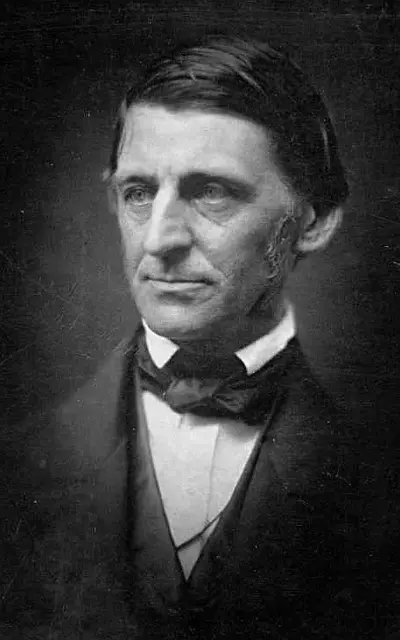
Ralph Waldo Emerson, who went by his middle name Waldo, was an American essayist, lecturer, philosopher, abolitionist and poet who led the transcendentalist movement of the mid-19th century. He was seen as a champion of individualism and a prescient critic of the countervailing pressures of society, and he disseminated his thoughts through dozens of published essays and more than 1,500 public lectures across the United States.
