Alexander Suvorov Quotes
The bullet misses, the bayonet does not.
Alexander V. Suvorov, 1729-1800, Russian Field Marshal, Quoted in Hew Strachan, European Armies and the Conduct of War, 1983
Sourced by: Eigen's Political and Historical Quotations


His hubris soon backfired as the Indians learned how to tactically cope with firearms. For example they soon learned that they would see the flash of the musket before the ball would discharge, so would lie down and the bullets would pass overhead. The muskets were effective as defensive weapons from behind barricades though not very accurate. Swords and pikes turned out to be more effective in most cases.

This reflected a commonly held belief that the gun was an ignoble invention.


The general had reported to the Czar that he had peacefully dissipated a protesting mob without firing a shot. The Czar felt that the absence of shooting and killing protesters would simply encourage more protests. See {613675}.

Ever since the invention and manufacturing of firearms, Bedouin Arabs have prized gun ownership highly. Gun ownership percentage is much higher than even the United States. Over time one or more guns appeared in every tent. With children about, the loaded gun has ever been a danger. Further, anger leads to gunplay in a society where guns are ubiquitous. Even for the gun owner, the additional time it takes to load a gun before using it is a safety valve that allows time for cooling off.

Even allowing for a certain amount of exaggeration, it is clear that there were many Americans who were personally armed in this period.


There were other factors which Stalin did not mention. There was a major factor of revenge and retaliation. The Germans had killed 22 million Russians (many murdered deliberately), and forced millions of others into slave labor. They had looted everything of value, artistically or commercially from Russian, homes, churches and other buildings. Many of the Russian officers believed that treatment of the Germans was only just given the barbaric behavior of the Germans and applauded by most of the German population.


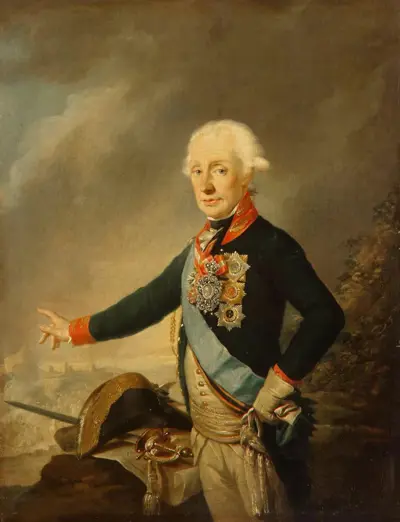
Alexander Vasilyevich Suvorov was a Russian general in service of the Russian Empire. He was Count of Rymnik, Count of the Holy Roman Empire, Prince of Italy, and the last Generalissimo of the Russian Empire. Suvorov is considered one of the greatest military commanders in Russian history and one of the great generals of the early modern period. He was awarded numerous medals, titles, and honors by Russia, as well as by other countries. Suvorov secured Russia's expanded borders and renewed military prestige and left a legacy of theories on warfare. He was the author of several military manuals, the most famous being The Science of Victory, and was noted for several of his sayings. Several military academies, monuments, villages, museums, and orders in Russia are dedicated to him. He never lost a single major battle he had commanded.
